100 Hobbies For Seniors (Beyond the Basics)

Seniorcenters.com is a free resource helping seniors and senior centers across America. Learn about our editorial processes.

Movement & Body (gentle, home-friendly)

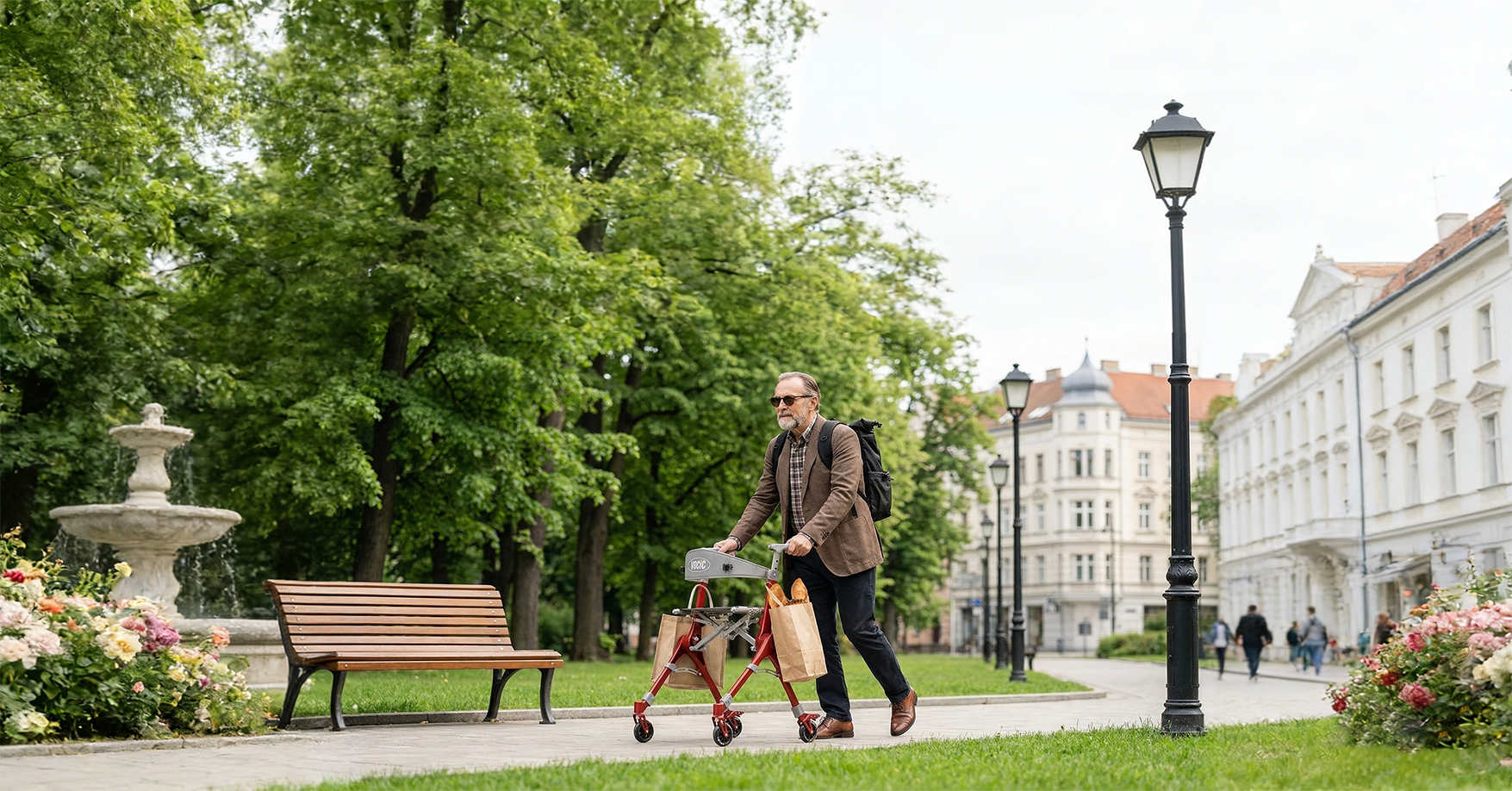
  1. Mindful walking
    Mindful walking is simply walking at a comfortable pace while paying attention to your breath, posture, and what you see and hear. It’s free, mood-lifting, and easy on joints; the main downsides are weather and sidewalk safety. Cost: $0–$60 (good shoes). Try it: walk 10 minutes and count five sounds you notice. If you love it: map two safe routes, add a photo-walk day, or track steps for gentle goals.
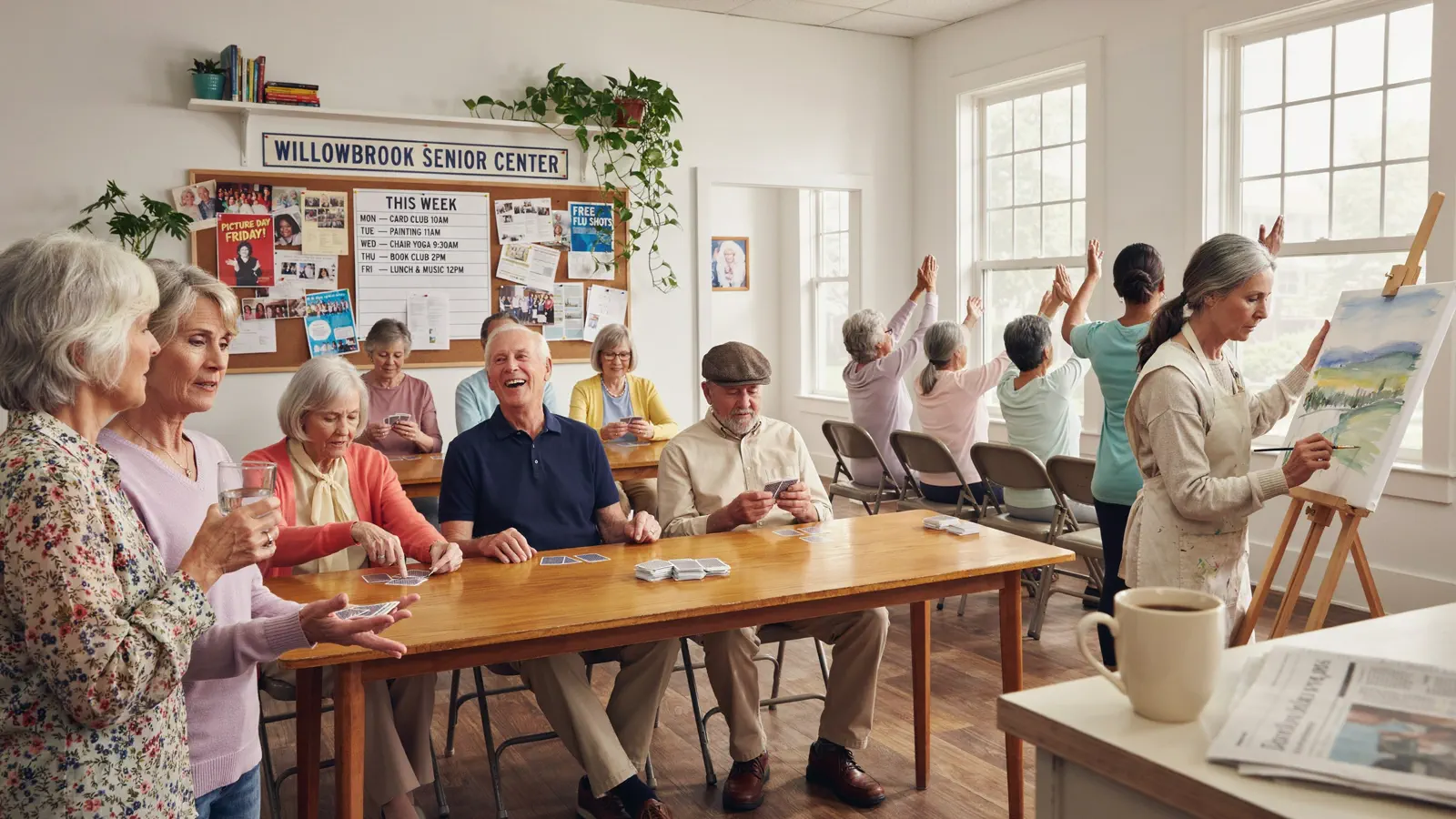
  2. Chair yoga
    Chair yoga uses a sturdy chair to support calm stretches and light strength moves, so you get flexibility without getting down on the floor. Pros: joint-friendly and adaptable; con: an unstable chair can wobble. Cost: $0–$20 (strap/towel). Try it: seated, raise arms on an inhale and fold forward on an exhale. If you love it: build a 10-pose routine you repeat three times a week.
  3. Balance practice
    Balance drills (heel-to-toe stance, single-leg holds with support) reduce fall risk and build confidence. They’re quick and require almost no space; the only con is you must practice near a counter for safety. Cost: $0. Try it: stand heel-to-toe and lightly touch the counter for 20 seconds. If you love it: add eyes-open head turns or gentle heel-to-toe walks along a hallway.
  4. Resistance bands
    Elastic bands let you do rows, presses, and leg work with gentle resistance that scales up as you get stronger. They’re portable and joint-friendly; old bands can snap, so inspect them. Cost: $15–$30 (light/medium set). Try it: seated band rows for 8–10 reps; last two should feel “pleasantly hard.” If you love it: log reps and colors and progress to door-anchor moves.
  5. Isometric holds
    Isometrics are “hold” exercises like wall sits or a plank against a countertop that build strength fast with little motion. They’re time-efficient; just remember to breathe to avoid straining. Cost: $0–$10 (timer, mat). Try it: do a 10-second wall sit while breathing slowly. If you love it: create a tiny circuit of four holds and extend each by 5 seconds weekly.
  6. Self-guided tai chi/qigong
    Slow flowing motions paired with breathing calm the nervous system and improve balance. It’s meditative and low impact; the only con is learning the sequence takes patience. Cost: $0–$20 (printed guide or video). Try it: learn one movement of “Eight Brocades” and repeat it five times. If you love it: memorize a short form and take it to a park at sunrise.
  7. Breathwork
    Intentional breathing (like 4-in/6-out or box breathing) lowers stress and helps sleep. It’s free and portable; if you breathe too fast you may feel lightheaded, so keep it gentle. Cost: $0. Try it: five slow rounds of inhale 4, exhale 6. If you love it: pair it with journaling or a bedtime routine.
  8. Morning mobility flow
    A 10–15 minute series of neck, shoulder, spine, hip, and ankle movements reduces stiffness and starts the day smoothly. It’s simple and equipment-free; the con is it’s easy to skip without a routine. Cost: $0–$15 (printed card, timer). Try it: three slow shoulder rolls, three hip circles, three ankle circles. If you love it: write your flow on an index card and keep it by the kettle.
  9. Mini-trampoline (rebounding)
    Gentle bouncing on a small rebounder is fun cardio that’s kind to joints and can aid lymph flow. Use a stability bar if balance is a concern; avoid if you’re unsteady. Cost: $60–$150. Try it: practice the “health bounce” (heels stay down) for 1 minute. If you love it: do 5 × 1-minute bounces with 1-minute rests and add music.
  10. Light dumbbells
    Two small dumbbells (2–10 lb) let you train whole-body moves for bone and muscle health. It’s clear to measure progress; form matters, so go slow and use a mirror if possible. Cost: $20–$50. Try it: 8 biceps curls; if the last two are easy, go slightly heavier next time. If you love it: rotate five core moves and record weight and reps.
  11. Gentle stretching
    Pick five stretches (calves, hamstrings, hips, chest, and back) and hold each for 20–30 seconds. It feels good and improves mobility; don’t force ranges. Cost: $0–$10 (strap/towel). Try it: seated hamstring stretch with a towel around your foot. If you love it: make a “TV-time stretch” routine you do during a show.
  12. Self-massage with a ball
    Rolling a soft ball under your feet, along calves, or against a wall for your shoulders eases tension. It’s cheap and quick; keep pressure light to avoid bruising. Cost: $5–$15. Try it: roll the sole of one foot for 60 seconds, compare sides. If you love it: add calves and upper back against a wall a few times a week.
  13. Nordic walking (with poles)
    Walking with poles adds arm work, improves posture, and can feel more stable. It’s great outdoors; cons are weather and learning pole rhythm. Cost: $30–$70 (adjustable poles). Try it: walk 5 minutes with a light opposite-arm/leg swing. If you love it: plan a flat route and extend by five minutes each week.
  14. Stationary cycling (gentle)
    A small upright or pedal-under-desk unit gives low-impact cardio while watching TV or reading. It’s easy on knees; the con is the device cost and seat comfort. Cost: $50–$200 (or try at a gym). Try it: pedal 5 minutes at a pace you can talk through. If you love it: set a three-day rotation of 10–20 minutes.
  15. Kite flying
    A single-line kite in a park or on a beach is simple, joyful movement with fresh air. Wind is the only tricky part; tangles happen. Cost: $10–$30. Try it: fly on a breezy day and practice gentle steering. If you love it: explore simple stunt kites or design and decorate your own.
  16. Juggling (beanbags)
    Learning the three-ball “cascade” is surprisingly calming and builds coordination. Drops happen (use soft beanbags over a bed). Cost: $10–$20. Try it: toss one ball in a small arc hand to hand; add a second once it feels smooth. If you love it: practice five minutes daily; add simple patterns later.
  17. Yo-yo (responsive)
    A classic yo-yo teaches rhythm and hand-eye coordination with short, satisfying sessions. Watch lamps and picture frames while you practice. Cost: $10–$20. Try it: throw a “sleeper” and bring it back five times. If you love it: learn a couple of beginner tricks and gentle looping.

Creative & Visual (paper, paint, fabric, tiny worlds)

  1. Urban sketching
    Take a small sketchbook and draw what’s in front of you—a mug, a doorway, a tree. It builds observation and gives you a visual diary; the only con is feeling self-conscious at first. Cost: $15–$40 (pen + pocket sketchbook). Try it: contour-draw your coffee mug without lifting the pen. If you love it: sketch one thing a day and watch your lines improve.
  2. Watercolor painting
    Transparent watercolors make soft, layered paintings with simple tools. It’s relaxing and portable; paper can buckle and water control takes practice. Cost: $25–$60 (student set, brushes, paper). Try it: paint a single fruit using just one color, making light and dark areas. If you love it: keep a watercolor journal and try outdoor “plein air” days.
  3. Gouache illustration
    Gouache is an opaque, water-based paint that lets you layer and correct mistakes easily. Colors are bold; learning thickness is the trick. Cost: $30–$70. Try it: paint a postcard-size fruit or flower with three colors plus white. If you love it: create greeting cards or small prints of cozy scenes.
  4. Linocut block printing
    Carve a simple design into soft linoleum, roll ink on, and print on paper or fabric. It’s satisfying and repeatable; tools are sharp, so use a cut-resistant glove. Cost: $35–$80 (starter kit). Try it: carve a leaf and make a few prints. If you love it: make a small edition of cards or decorate tea towels.
  5. Cyanotype sun printing
    Brush or buy pre-coated paper, place leaves or lace on top, and let the sun create blue-white images. It’s low-mess and feels magical; chemistry can stain, so protect your surface. Cost: $25–$40. Try it: make one print in midday sun and rinse to reveal it. If you love it: print on fabric and bind a botanical set.
  6. Paper marbling (suminagashi)
    Float ink on water, swirl gently, and lay paper on top to pick up the pattern. It’s meditative and beautiful; you’ll need a tray and drying space. Cost: $25–$60. Try it: marble two sheets and trim them into bookmarks. If you love it: use marbled paper to cover notebooks you make.
  7. Bookbinding (simple)
    Sew or glue your own notebooks—great for gifts and personal journals. It’s practical and creative; precision matters but you can start simple. Cost: $20–$50. Try it: stitch a small three-hole pamphlet notebook. If you love it: make a memory book for a trip or family stories.
  8. Origami tessellations
    Fold repeating patterns from one sheet of paper for striking, geometric art. It’s inexpensive and portable; it asks for patience and good light. Cost: $5–$20. Try it: fold a grid and a simple repeating triangle pattern. If you love it: mount a finished tessellation as wall art.
  9. Calligraphy & hand lettering
    Practice neat, decorative writing with a brush pen or a broad nib for cards and quotes. It’s calming; hand cramps can happen if you grip too tight. Cost: $20–$40. Try it: slowly write the alphabet focusing on even spacing. If you love it: letter envelopes for friends or make framed quotes.
  10. Collage & junk journaling
    Use magazines, tickets, old photos, and patterned paper to make story pages. It’s expressive and low-cost; paper clutter builds up, so keep a box. Cost: $10–$30 (glue, scissors). Try it: make one page about a favorite place using five cutouts. If you love it: create a themed journal (garden, travels, recipes).
  11. Embroidery
    Stitch small designs on cloth with a hoop and thread—flowers, initials, simple borders. It’s rhythmic and portable; tiny needles and eyestrain are the cons. Cost: $15–$30. Try it: backstitch your initials on scrap fabric. If you love it: decorate tea towels or shirt pockets with tiny motifs.
  12. Sashiko visible mending
    Reinforce and decorate worn spots on clothes with simple running stitches. It’s functional art; heavier fabric can be tough to push through. Cost: $15–$30. Try it: stitch a straight grid on a patch. If you love it: build a small “mended and beautiful” wardrobe.
  13. Macramé
    Tie simple knots to make plant hangers and wall pieces. It’s quick to learn; cords shed a bit, so work over a sheet. Cost: $15–$40. Try it: practice the square knot and make a key fob. If you love it: make matching plant slings for a window.
  14. Leatherworking (small goods)
    Cut, punch, and hand-stitch leather into wallets, straps, or notebook covers. It’s durable and useful; tools are sharp and glue can smell. Cost: $40–$120. Try it: stitch a simple card sleeve. If you love it: make gifts with initials or try a belt.
  15. Polymer clay miniatures
    Bake tiny charms, beads, or figures in a home oven. It’s colorful and tidy; use a dedicated tray and wash hands before eating. Cost: $20–$40. Try it: shape three beads and bake them. If you love it: create a small “mini foods” series or jewelry sets.
  16. Resin casting (small)
    Pour two-part resin into molds to make clear coasters or charms with flowers inside. Results are glassy; you need gloves and ventilation. Cost: $30–$80. Try it: cast one coaster with a dried leaf. If you love it: make matching sets for gifts.
  17. Woodcarving (spoon)
    Carve a spoon or spreader from soft wood using a safety glove and simple knives. It’s tactile and rewarding; blades are sharp, so go slow. Cost: $35–$80. Try it: carve a small butter spreader with rounded edges. If you love it: shape a daily-use spoon and oil it proudly.
  18. Air-dry clay hand-building
    Pinch small bowls and figures without needing a kiln. It’s beginner-friendly; thicker parts can crack, so keep pieces modest. Cost: $15–$30. Try it: make a tangerine-sized pinch pot. If you love it: paint and seal a mini planter set.
  19. Stained glass (suncatcher)
    Cut colored glass, wrap edges in copper foil, and solder a small window piece. It’s gorgeous; you’ll need eye protection, ventilation, and patience. Cost: $120–$250. Try it: assemble a pre-cut kit for a simple sun. If you love it: design your own geometric designs.
  20. Paper quilling
    Roll thin paper strips and shape them into flowers and patterns for cards. It’s light on the hands; it just asks for patience with tiny parts. Cost: $10–$20. Try it: make coils and teardrops and arrange a small flower. If you love it: frame a letter monogram with quilled vines.
  21. Bead weaving
    Stitch beads into patterns for bracelets using a needle and thread. It’s rhythmic and portable; beads can escape, so use a tray. Cost: $15–$30. Try it: weave a simple ladder-stitch bracelet. If you love it: design a family-color pattern set.
  22. Wire-wrapped jewelry
    Shape soft wire around stones to make pendants or rings—no solder needed. It’s satisfying; wire ends can scratch, so file them smooth. Cost: $15–$30. Try it: wrap a pebble in a simple “cage.” If you love it: use tumbled stones and make matched sets.
  23. Model dioramas (mini worlds)
    Build tiny scenes—gardens, towns, or memories—on a small base using foam, paint, and figures. It’s immersive and creative; materials can spread, so keep a bin. Cost: $20–$60. Try it: make a 6-inch scene with a path and a tree. If you love it: create a seasonal village or a scene from your childhood.
  24. Paper marquetry (paper inlay)
    Cut colored papers to inlay geometric or floral designs that look like wood marquetry. It’s precise but safe; bubbles happen if you rush glue. Cost: $10–$25. Try it: inlay a coaster-size panel. If you love it: decorate box lids or picture frames.

Music, Sound & Images (listen, play, record)

  1. Smartphone photography project
    Pick a theme (doors, shadows, morning light) and take one photo daily. It sharpens your eye and needs no new gear; storage can fill up. Cost: $0. Try it: shoot the same object from five angles today. If you love it: print a small book after 30 days.
  2. Stop-motion mini films
    Make tiny movies by moving an object a little, taking a photo, and repeating. It’s charming; you’ll want steady light and a phone stand. Cost: $0–$30. Try it: animate a 5-second clip of a toy crossing a table. If you love it: film a favorite recipe step-by-step.
  3. Film photography (home black-and-white)
    Shoot a roll and develop it at home with simple chemistry for that classic look. It’s tactile and magical; it takes temperature control and a sink. Cost: $80–$150 (used camera + tank), ongoing ~$8/month. Try it: develop one roll following a checklist. If you love it: make prints or high-quality scans.
  4. Shadow photography series
    Focus only on shadows and silhouettes to create abstract images anywhere. It’s creative and free; light changes quickly, so be patient. Cost: $0. Try it: take ten shadow photos near noon. If you love it: print a black-and-white postcard set.
  5. Time-lapse window watching
    Set your phone to take a photo every minute to reveal cloud and light changes. It’s easy once set up; you need a stable stand and some storage. Cost: $0–$20. Try it: record a 30-minute cloud time-lapse. If you love it: compile seasonal videos with calm music.
  6. Field recording & soundwalks
    Record everyday sounds—birds, rain on the porch, a train in the distance—and label them. It trains your ears; wind noise can be annoying. Cost: $0–$100. Try it: record 60 seconds in your yard and name the file by date/time. If you love it: curate “sound albums” like a nature diary.
  7. Classical music listening logs
    Choose a piece, listen attentively, and jot three sentences about what you noticed. It builds deep appreciation and calm; some pieces are long, so pick movements. Cost: $0. Try it: listen to one movement and write a mood word, an instrument you noticed, and a moment you liked. If you love it: keep a yearly log and playlists.
  8. Ukulele (self-paced)
    A four-string ukulele is friendly for beginners and great for sing-alongs. Fingers and strumming hand need a few days to adapt. Cost: $50–$120 (concert uke + tuner). Try it: learn C–F–G7 and switch slowly. If you love it: fingerpick simple melodies.
  9. Harmonica (key of C)
    A small harmonica lets you play tunes with breath and rhythm. It’s pocket-friendly; bending notes takes time. Cost: $20–$50. Try it: play “Ode to Joy” across holes 4–6. If you love it: learn a blues riff and simple folk songs.
  10. Handpan/steel tongue drum
    These instruments make soothing, bell-like tones with simple patterns. They sound lovely right away; larger handpans can be pricey. Cost: $60–$350 (tongue drum). Try it: play a slow three-note pattern for five minutes. If you love it: record your own relaxation tracks.
  11. Singing for one
    Gentle vocal warmups and favorite songs improve breath and mood. Over-singing can strain, so keep it light. Cost: $0. Try it: hum a 5-note scale softly. If you love it: record lullabies or standards for family.
  12. Audio digitization (cassettes/vinyl)
    Transfer old tapes and records to digital so memories are safe and shareable. It’s meaningful; transfers take real-time. Cost: $30–$120 (simple converter/cables). Try it: digitize one song and label it clearly. If you love it: make a family “greatest hits” playlist.

Tech & Tinkering (light, practical projects)

  1. Photo scanning & archiving
    Scan prints or slides, name them clearly (Year-Month-Person), and back them up. It preserves history; dust and glare are the nuisances. Cost: $0–$150 (scanner or phone stand). Try it: scan 10 photos and file them by year. If you love it: create a slideshow or printed photo book.
  2. Desktop publishing (cards/newsletters)
    Design simple greeting cards or a one-page family newsletter. It’s creative and useful; fonts can overwhelm—use templates at first. Cost: $0–$30. Try it: make a one-page fall newsletter with three photos. If you love it: print seasonal card sets.
  3. Personal knowledge system (commonplace/Zettelkasten-lite)
    Write one idea per card or note (quote, lesson, memory) and link related ideas. It boosts memory and creativity; keep it tidy to avoid sprawl. Cost: $5–$15 (index cards). Try it: capture three ideas today and link two. If you love it: compile small booklets of your favorite themes.
  4. Family document digitization
    Scan birth certificates, warranties, and important lists so they’re easy to find. It brings peace of mind; name files clearly and keep a backup drive. Cost: $0–$150. Try it: digitize five key papers and store them on a labeled USB. If you love it: create a simple “family vault” folder with contacts and instructions.
  5. Basic coding puzzles
    Solve simple logic puzzles using block-based or beginner code to make little programs run. It’s a brain workout; syntax can frustrate, so start visual. Cost: $0. Try it: complete one puzzle that uses a loop to repeat a task. If you love it: automate a tiny chore like renaming photo files.
  6. 3D modeling (Tinkercad-level)
    Design simple objects (nameplates, coin trays) in a free browser tool. It’s spatial and satisfying; mousing takes a little practice. Cost: $0. Try it: model a tray with your name embossed. If you love it: get it 3D-printed through a service or local makerspace.
  7. Raspberry Pi retro gaming
    Set up a tiny computer to play classic, legal retro games or homebrew titles. It’s nostalgic and techy; setup takes a calm hour. Cost: $60–$120. Try it: plug in a controller and run a demo game. If you love it: build a small living-room console.
  8. OpenStreetMap editing
    Fix or add paths, benches, or building names on the open world map using aerial images. It helps everyone; accuracy matters, so stick to clear edits. Cost: $0. Try it: add a missing footpath near your home. If you love it: map accessibility features like curb cuts.

Nature, Garden & Simple Science

  1. Houseplant propagation
    Take cuttings from easy plants (pothos, spider plant), root them in water, and pot them. It’s nurturing and low-cost; overwatering causes trouble. Cost: $10–$25. Try it: snip a 4-inch pothos cutting and place in a jar. If you love it: trade cuttings and build a windowsill jungle.
  2. Terrariums & moss jars
    Create tiny green worlds in glass using pebbles, soil, and moss. They’re pretty and low-maintenance; too much water causes fog or mold. Cost: $20–$50. Try it: build a jam-jar terrarium with a small fern. If you love it: curate a shelf of mini-ecosystems.
  3. Bonsai (beginner)
    Train a small tree with pruning and wiring over time. It teaches patience; seasonal care is part of the fun. Cost: $25–$60. Try it: learn your tree’s watering rhythm and prune one small branch. If you love it: repot in spring and shape gently each year.
  4. Orchid care
    Grow a phalaenopsis orchid with soak-and-drain watering and bright, indirect light. Blooms are rewarding; overwatering is the usual mistake. Cost: $20–$40. Try it: soak the pot for 10 minutes, drain well, and wait for roots to silver before the next water. If you love it: try an oncidium or cattleyas.
  5. Succulent propagation
    Place leaves on gritty soil and watch new plants form. It’s quick and sculptural; too much water causes rot. Cost: $10–$20. Try it: start a tray of leaf cuttings. If you love it: design a shallow rock garden bowl.
  6. Microgreens
    Grow young greens on a tray for harvest in 7–12 days. They’re tasty and compact; you’ll mist daily and rinse trays. Cost: $20–$40, ongoing ~$8/month seeds. Try it: sow radish seeds and taste at day 10. If you love it: rotate two trays for steady salads.
  7. Seed saving
    Collect and label seeds from peppers, tomatoes, or flowers and store them dry. It’s thrifty and satisfying; moisture ruins seeds, so use paper envelopes. Cost: $5–$15. Try it: dry and label marigold seeds. If you love it: start a small seed library box.
  8. Backyard phenology journal
    Note first blooms, bird arrivals, and moon phases through the year. It deepens your sense of seasons; consistency is the only challenge. Cost: $0–$10. Try it: write today’s weather and one plant observation. If you love it: compare months year-to-year.
  9. Bird feeding & log
    Put up a feeder and write down which birds visit and when. It brings nature close; seed spills and squirrels happen. Cost: $20–$60, ongoing ~$6/month seed. Try it: log the first three species you see. If you love it: add a tray to catch hulls and try a different seed mix.
  10. Home weather station (simple)
    Track temperature, barometric pressure, and rainfall with a small station or manual tools. It’s science at home; placement affects accuracy. Cost: $30–$120. Try it: note pressure morning and evening and compare. If you love it: make weekly charts.
  11. Stargazing
    Look at constellations, the Moon, and bright planets with your eyes or binoculars. It’s awe on demand; clouds and city lights can interfere. Cost: $0–$60 (binoculars optional). Try it: find the Big Dipper and use it to locate the North Star. If you love it: sketch the Moon’s changing shape.
  12. Cloud identification
    Learn the main cloud types and how they hint at coming weather. It pairs well with walks; shapes can be ambiguous. Cost: $0–$10. Try it: decide whether today’s clouds are cumulus or cirrus. If you love it: make a photo guide from your own sky shots.
  13. Birdsong ear training
    Learn a few local bird calls so your walks feel like conversations. It’s delightful; some species sound similar, so start with three. Cost: $0. Try it: learn the calls of your three most common backyard birds. If you love it: keep a “heard today” list in spring.
  14. iNaturalist backyard survey
    Photograph plants and insects in your yard and upload for community ID. It’s helpful to science; not every photo gets a fast ID. Cost: $0. Try it: snap one plant and one insect with clear photos. If you love it: build a “life list” for your property.
  15. Globe at Night (light-pollution count)
    On a clear night, compare visible stars to a chart and report your sky’s brightness. It’s a 10-minute citizen-science task; you’ll need dark adaptation. Cost: $0. Try it: after 10 minutes outside, count stars in a constellation. If you love it: submit a reading each month.
  16. Rain-gauge observing (CoCoRaHS-style)
    Install a basic gauge and read rainfall daily to contribute to community data. It’s a peaceful morning ritual; freezes and wind can affect readings. Cost: $20–$40. Try it: mount the gauge level and take your first reading after a shower. If you love it: send monthly summaries to neighbors or a local group.

Food & Drink (small kitchen projects)

  1. Sourdough bread
    Keep a simple starter and bake crusty loaves in a pot—slow food with amazing results. It takes a schedule; flour cost adds up. Cost: $0–$20 to start, ongoing ~$8/month flour. Try it: mix a no-knead dough tonight, bake tomorrow. If you love it: branch into focaccia or seeded loaves.
  2. Quick pickles
    Slice cucumbers, onions, or carrots and pour a simple vinegar brine over them—no canning needed. They’re fast and bright; they live in the fridge, not on a shelf. Cost: $10–$20. Try it: pickle red onions and taste tomorrow. If you love it: create a house pickle blend.
  3. Fermented vegetables
    Salted cabbage or carrots bubble into crunchy, tangy ferments with natural probiotics. Cleanliness matters; there’s a light “ferment” smell. Cost: $10–$30. Try it: pack salted cabbage in a jar and burp daily. If you love it: make small seasonal batches.
  4. Yogurt making
    Warm milk, add culture, and keep it cozy until it sets—then strain for Greek style. It saves money; you do monitor temperature. Cost: $20–$40, ongoing ~$10/month milk. Try it: incubate a pint in a warm oven with the light on. If you love it: try different cultures or non-dairy versions.
  5. Fresh cheese (paneer/ricotta)
    Curdle hot milk with lemon juice or vinegar, strain, and enjoy. It’s quick and delicious; it’s not long-keeping. Cost: $10–$20 per batch. Try it: make a small bowl of ricotta. If you love it: press paneer or try mozzarella.
  6. Dehydrating fruit & herbs
    Dry apple slices, banana chips, or herbs in a low oven or dehydrator. It reduces waste; it takes hours. Cost: $40–$80 (basic dehydrator) or $0 with oven. Try it: dry apple slices and check at 2–3 hours. If you love it: stock jars of snacks and herb blends.
  7. Chocolate tempering
    Carefully heat and cool chocolate so it sets shiny with a clean snap—great for gifts. Temperatures matter; if off, it looks dull but still tastes good. Cost: $15–$40. Try it: temper a small amount and dip dried fruit. If you love it: make bark with nuts and citrus zest.
  8. Coffee brewing (home barista)
    Dial in grind size and water-to-coffee ratio for a flavorful cup using pour-over, press, or moka. It’s a pleasant ritual; gadgets can multiply, so start simple. Cost: $20–$60. Try it: brew at a 1:15 ratio and note taste. If you love it: keep a tiny tasting log.
  9. Tea blending
    Mix tea leaves, herbs, and spices into your own blends. It’s soothing and creative; label ingredients in case of allergies. Cost: $10–$25. Try it: black tea with orange peel and a pinch of cinnamon. If you love it: make seasonal sampler jars.
  10. Spice-rub design
    Combine pantry spices into “house” rubs for meats and vegetables. It’s cheap and flavorful; old spices lose punch, so date your jars. Cost: $10–$20. Try it: paprika-cumin-garlic-salt on roasted potatoes. If you love it: write recipe cards for family.
  11. Decorated cookies (simple icing)
    Bake sugar cookies and practice easy lines and dots with thin icing. They’re festive; icing consistency takes a bit to learn. Cost: $15–$40 plus pantry goods. Try it: draw dots and lines on parchment until smooth. If you love it: create holiday assortments.
  12. Home sodas & shrubs
    Make fruit-vinegar syrups (shrubs) and mix with sparkling water for refreshing drinks. They’re bright and low-sugar; they need fridge space. Cost: $10–$20. Try it: make a citrus peel shrub and mix 1:4 with soda. If you love it: craft a trio of flavors for guests.
  13. Simple jam making
    Cook fruit with sugar and lemon until it sheets off a spoon; small batches keep it easy. It’s sweet and giftable; watch heat and cleanliness. Cost: $10–$25 per small batch. Try it: make one jar of strawberry jam. If you love it: try peach or mixed-berry blends.

Writing, Memory & Family projects

  1. Micro-memoir (one-page stories)
    Write a single page each week about a moment in your life (“the best advice I got,” “the day I…”) and collect them. It’s meaningful and builds legacy; perfectionism can stall you, so keep it simple. Cost: $0–$10. Try it: write one page titled “A smell that takes me back.” If you love it: assemble a slim printed book for family.
  2. Perfumery (simple blends)
    Blend a few drops of essential or fragrance oils into a roll-on or spray for a personal scent. It’s creative; patch-test for skin sensitivity and work with good airflow. Cost: $20–$50. Try it: blend citrus + floral in carrier oil on a blotter strip. If you love it: craft seasonal scents or linen sprays.
  3. Natural fabric dyeing
    Use onion skins, tea, or berries to dye scarves or napkins for soft, earthy colors. It’s eco-feeling; colors vary and pots can stain, so dedicate a pot. Cost: $15–$40. Try it: dye a cotton scarf in strong tea. If you love it: learn simple tie-patterns (shibori).
  4. Sewing alterations
    Hem pants, replace buttons, or take in seams for practical wins. It saves money; precision takes practice. Cost: $0–$120 (hand needles to simple machine). Try it: sew on a button neatly. If you love it: tailor thrift finds or make easy tote bags.
  5. Lamp rewiring (basic) Replace an old cord or socket on a table lamp (unplugged, of course) and bring it back to life. It’s satisfying home care; safety first and go slowly. Cost: $10–$40 (UL-listed cord set + socket). Try it: photograph the original wiring, then swap in a cord set—neutral (ribbed) wire to the silver terminal—before testing with an LED bulb. If you love it: rewire a matching pair of thrifted lamps and add fresh shades; call a pro if anything seems uncertain.
  6. Oral history phone interviews Record short chats with relatives about favorite memories and everyday details. It strengthens bonds; audio clutter happens if you don’t label files. Cost: $0–$10 (voice memo app, notebook). Try it: ask three prompts (“What was breakfast like growing up?” “A sound you remember?” “Best advice you got?”) and record 10 minutes. If you love it: edit clips into a 20-minute “family stories” album with a simple intro and music.
  7. Family recipe book (scan + write) Collect beloved recipes, scan the originals, and typeset clear versions with notes. It preserves flavor and history; standardizing measurements takes patience. Cost: $0–$30 (binder or short print run). Try it: pick five recipes, add a photo or memory to each, and save as a PDF. If you love it: expand to 25 recipes with an index and give printed copies for holidays.
  8. Postcard pen pals & mail art Send simple postcards—sketches, quotes, tiny collages—to a friend weekly. It’s joyful and bite-size; addresses and stamps are the only admin. Cost: $5–$15 to start. Try it: write one postcard today with a two-sentence update and a doodle. If you love it: start a monthly swap with two friends and theme each month (yellow, circles, city views).
  9. Memory shadowbox Arrange ticket stubs, maps, photos, and a small object in a shallow frame. It turns clutter into art; glass glare means careful placement. Cost: $10–$30. Try it: choose one event (trip, concert) and mock up a layout on the table before gluing. If you love it: make a seasonal series and label each with a tiny caption strip.
  10. Legacy photo captioning Add names, dates, and places to old family photos while the stories are still fresh. Future you will be grateful; handwriting on originals can smudge, so use sleeves or the back edge with a photo-safe pen. Cost: $0–$15. Try it: label ten prints with who/where/year and store in archival envelopes. If you love it: create a simple album with short captions and a family tree page up front.

Popular Next Reads

Browse thousands of Senior Centers from around America. Senior Centers are an integral part of society and are the center of life for many seniors and aging adults.

Find a Senior Center which fits your needs using our search feature and keep up to date on all the latest news.

Meet Our New AI Assistant!

Click the icon to Ask Anything!

Arrow pointing to chatbot button

Advertisers are not endorsed by SeniorCenters.com or any senior center listed.
This site is not endorsed by or affiliated with any senior center or organization listed.

© 2025 SeniorCenters.com, LLC.

Stay Connected: Senior Center News & Support for Seniors & Caregivers

Just one helpful email per month – no clutter, just value.