Planning Halloween for older adults isn’t about jump scares or fog machines. It’s about comfort, conversation, and little sparks of delight. The sweet spot is a mix of sensory fun, light movement, memory prompts, and chances to build community. You know what? With a bit of prep and a few clever tweaks, these activities practically run themselves.
Below are 20 senior-friendly Halloween ideas built for busy activity teams. Each one includes setup notes, how to run it, safety cues, and adaptations for different abilities. Use what fits your calendar and your crowd. Leave the rest for next year.
20 Halloween Activities (With Setup and How-To)
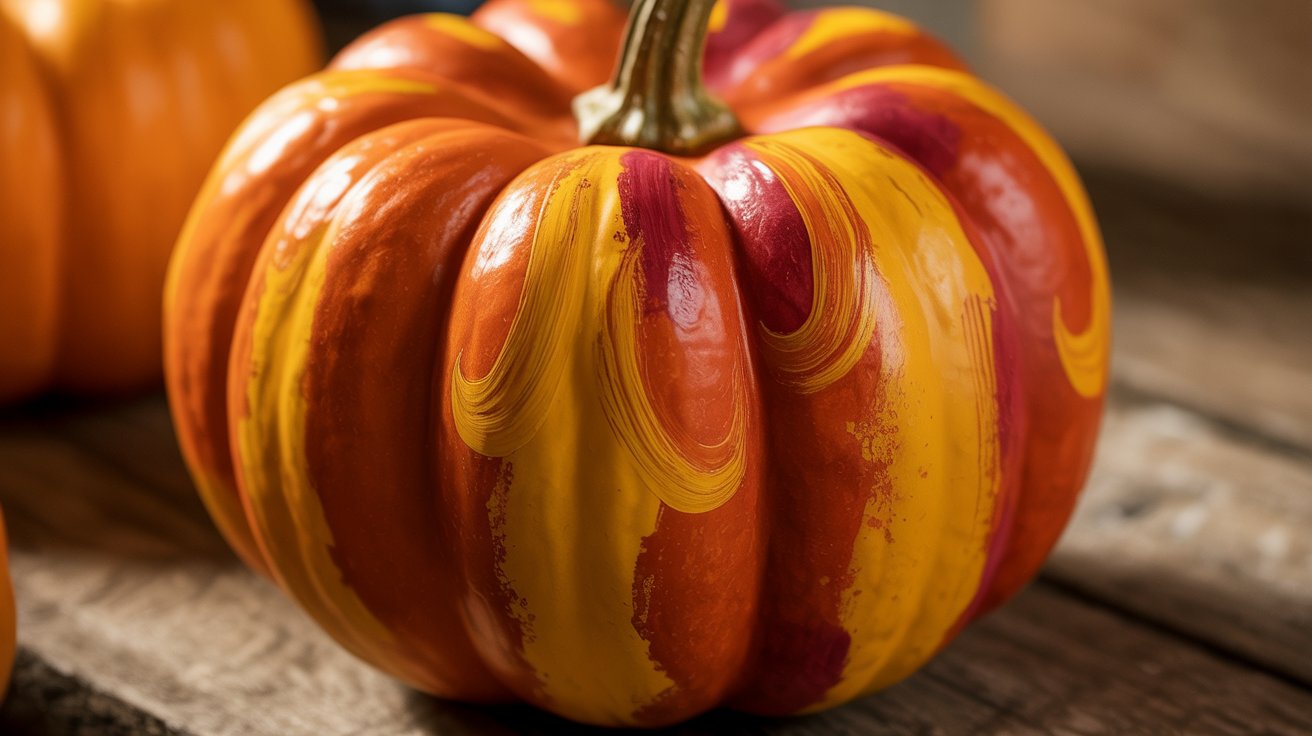
1) Pumpkin Paint & Sip (No Carving, No Stress)
Why it works: It’s colorful, social, and safe. No knives, no mess beyond washable paint.
You need: Mini pumpkins or faux pumpkins, acrylic paint or paint pens, paper plates, aprons, table covers, and a “sip” station with hot cider or spiced tea. Large-print stencils are a win. A Cricut helps if you have one, but a simple printout works too.
How to run it: Seat residents around covered tables. Offer sample designs on card stock—classic faces, leaves, cats. Encourage tracing using painter’s tape to steady edges. Play soft seasonal music. Dry pumpkins on labeled trays so nobody loses their artwork.
Adaptations & safety: Use paint pens for shaky hands. Provide foam grips on brushes. Set up a quiet table for those who prefer one-on-one help. Keep pathways clear; pumpkins roll.
2) Story Lanterns—Little Glows with Big Memories
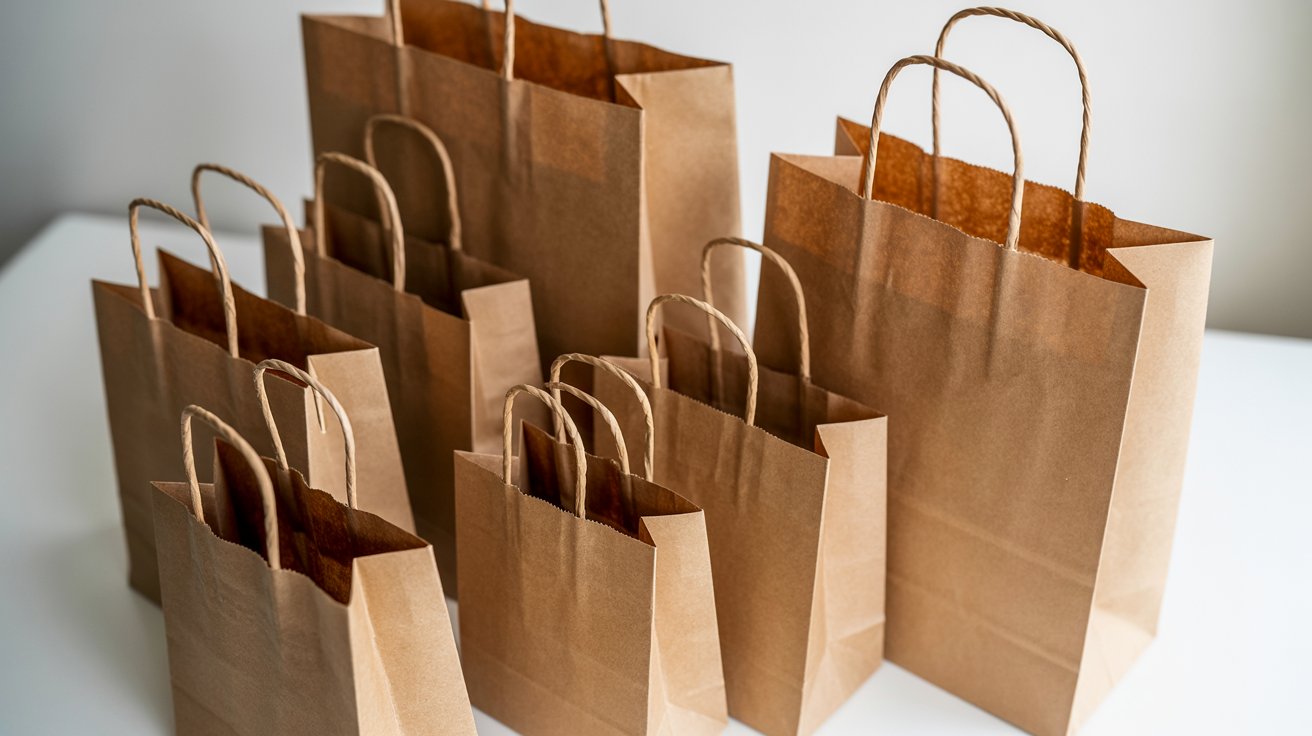
You need: Brown paper bags, hole punch or craft knife for staff use, leaf and pumpkin templates, flameless tea lights, stickers, and markers.
Setup: Pre-cut a few simple shapes in the bags (staff handles blades). Residents decorate with markers or stickers, then drop a light inside. Instant lantern.
Run it: Invite each person to add a one-line memory written on the bag—“My dad’s chili at Halloween,” “Handmade paper masks in ’52.” Line a hallway with the lanterns for a gentle evening stroll.
Adaptations: Bold markers for low vision. For memory care, pair guests with volunteers who can scribe their words. Keep lights clearly marked and battery-checked.
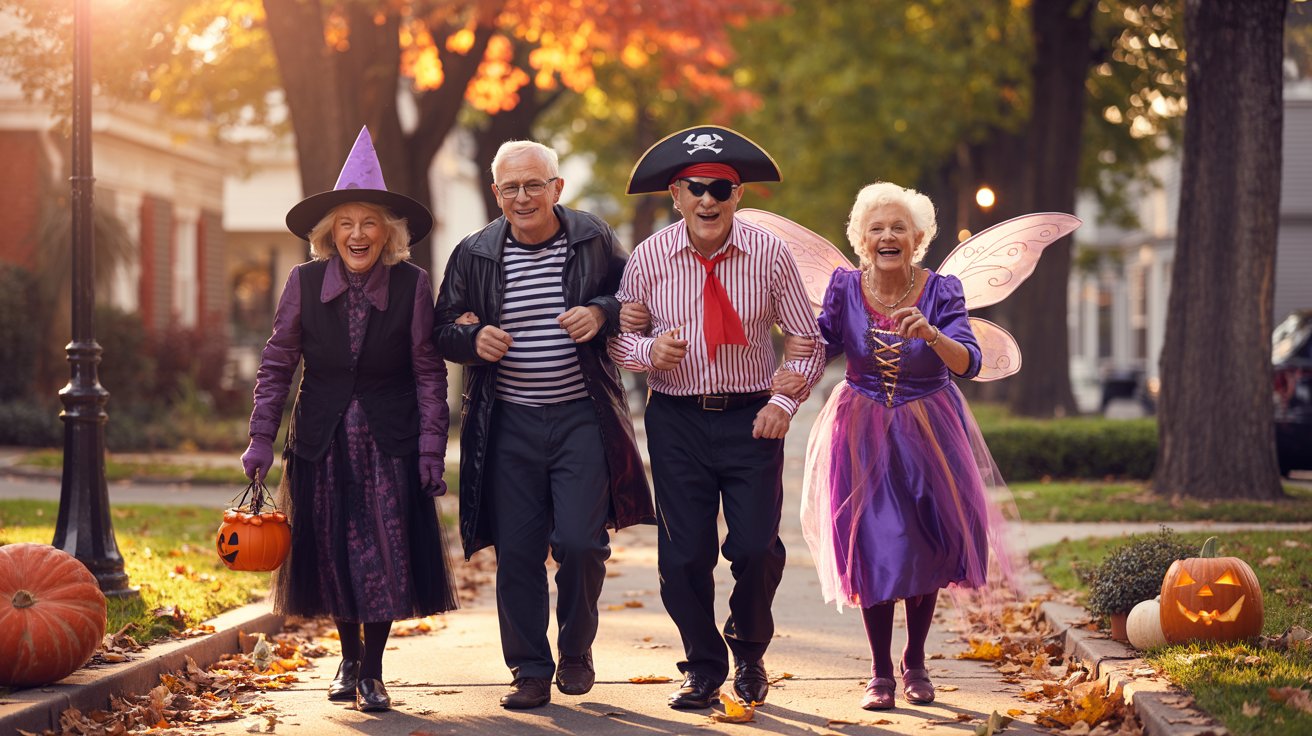
3) Costume Parade & Photo Nook
You need: Easy costume pieces: capes, hats, shawls, cat ears, scarves; mirrors; a neutral backdrop; a ring light; and a Polaroid-style camera.
How to run it: Invite staff and residents to add one festive item—simple is enough. Set a clear path with chairs along the route. Announce names and one fun fact. Snap a photo at the end and hand it to the resident in a labeled frame.
Adaptations & safety: Avoid full-face masks; they can unnerve folks with dementia. Walkers and wheelchairs get front-row pride. Keep costume pieces soft, lightweight, and fragrance-free.
4) Classic Radio Mystery Hour
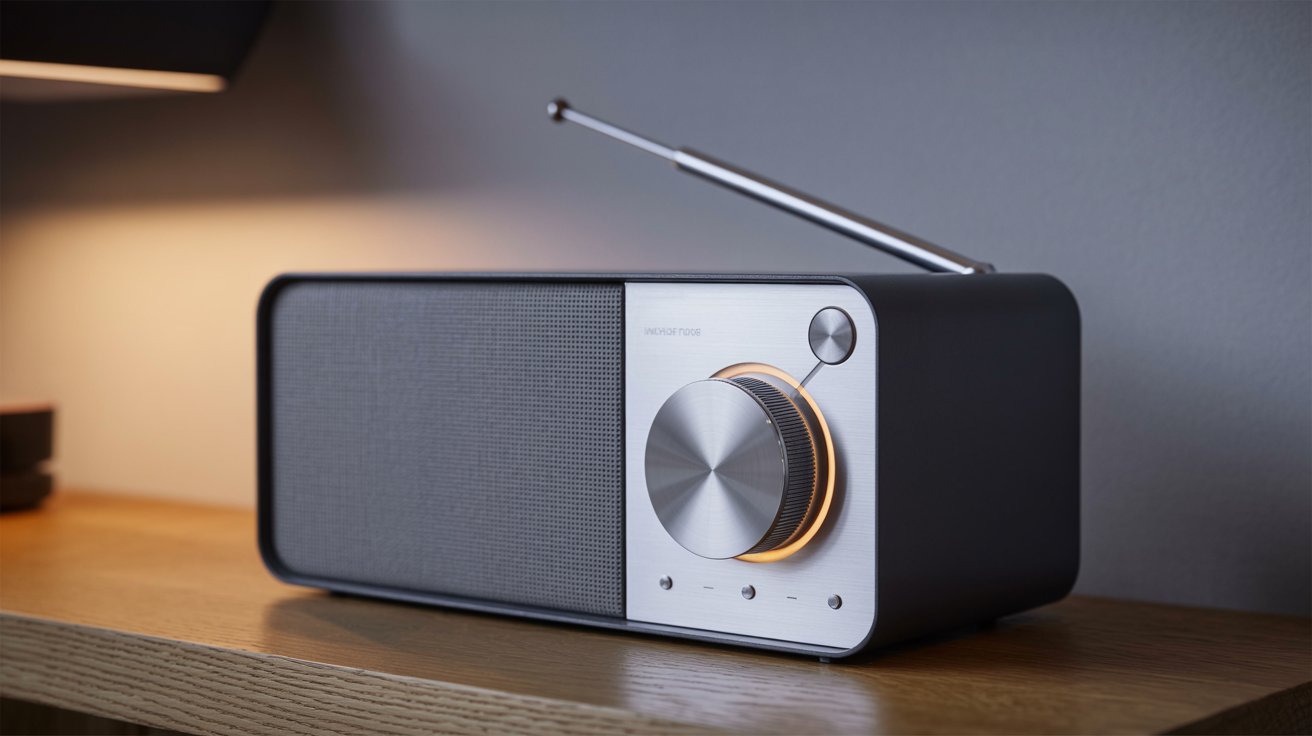
You need: A speaker, printed show descriptions, and public-domain old-time radio episodes. The Internet Archive hosts many classics.
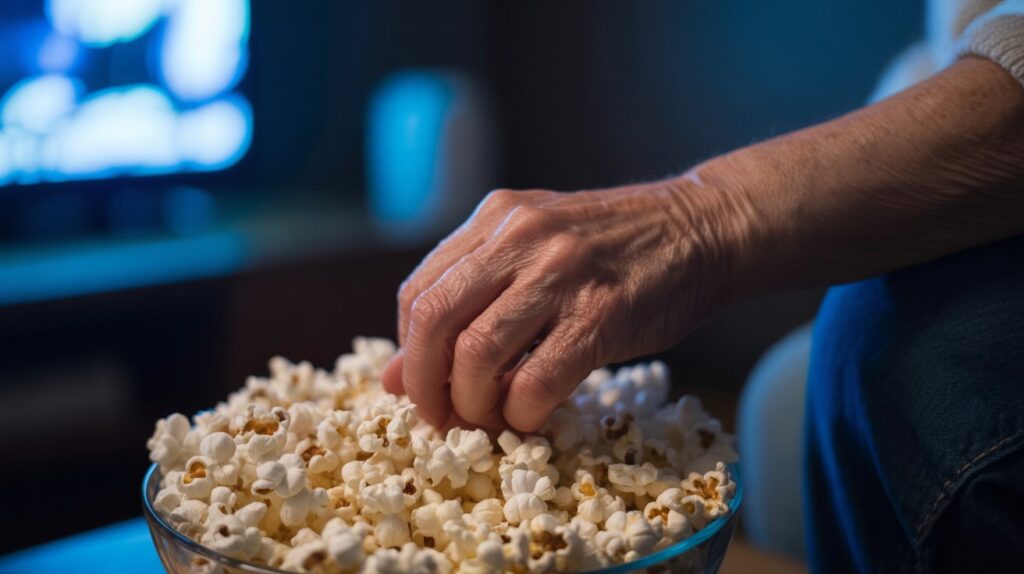
Run it: Dim the lights (not too much), serve popcorn, and play a 20–30 minute episode. Pause at the midpoint for a quick discussion: “What do you think happens next?” After the ending, invite reactions and favorite parts.
Adaptations: Provide large-print summaries for hearing loss. Offer captions via transcripts, or hand out scene notes. Keep volume steady and test speakers beforehand.
5) Candy Tasting—Thoughtful, Not Sugary Chaos
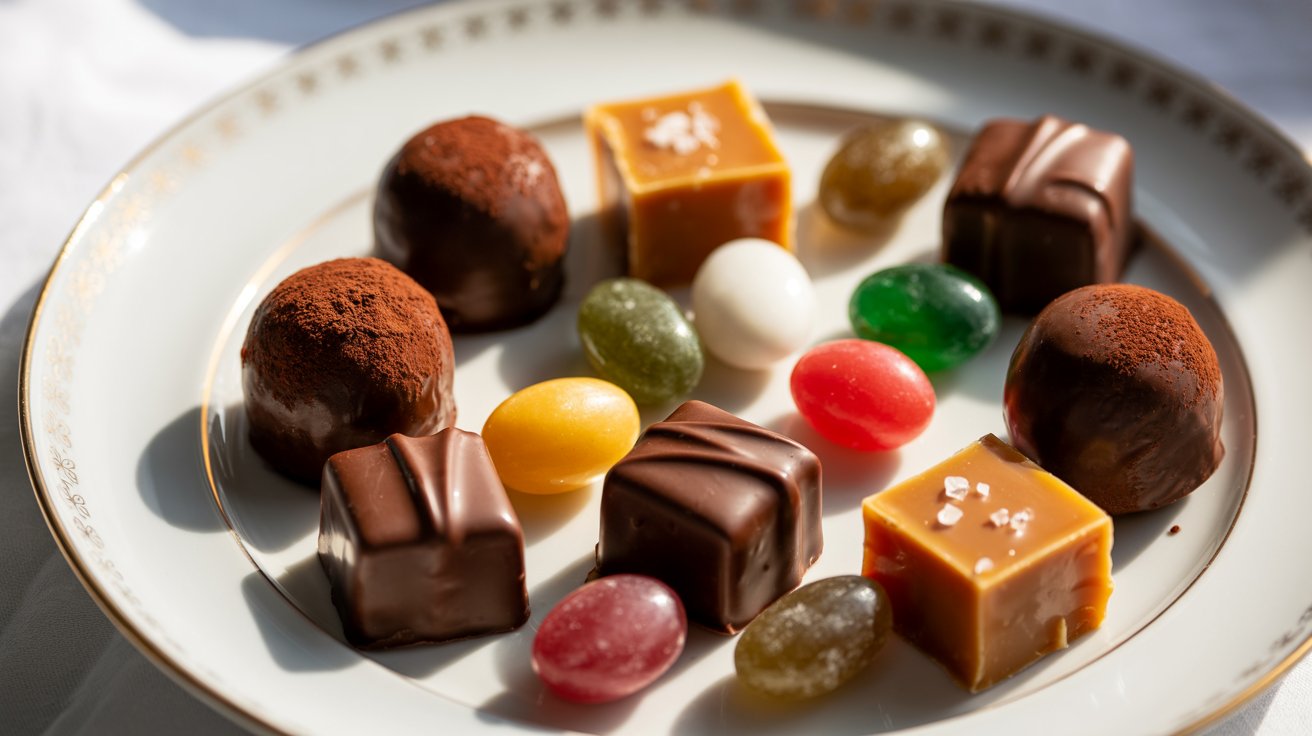
You need: Small tasting plates; a few chocolate types (milk, dark), caramel bits, sugar-free choices, and seasonal fruit like sliced pears. Add ingredient cards with allergen icons.
How to run it: Offer tiny samples by category. Ask residents to rate textures and flavors: smooth, crumbly, too sweet, just right. Keep water and tea on hand. It’s more “chocolate flight” than free-for-all.
Adaptations & safety: Check dietary notes first. Cut everything into small, soft bites. Provide napkins and discreet spit cups for anyone with chewing concerns.
6) “Memory Box” Mini-Museum
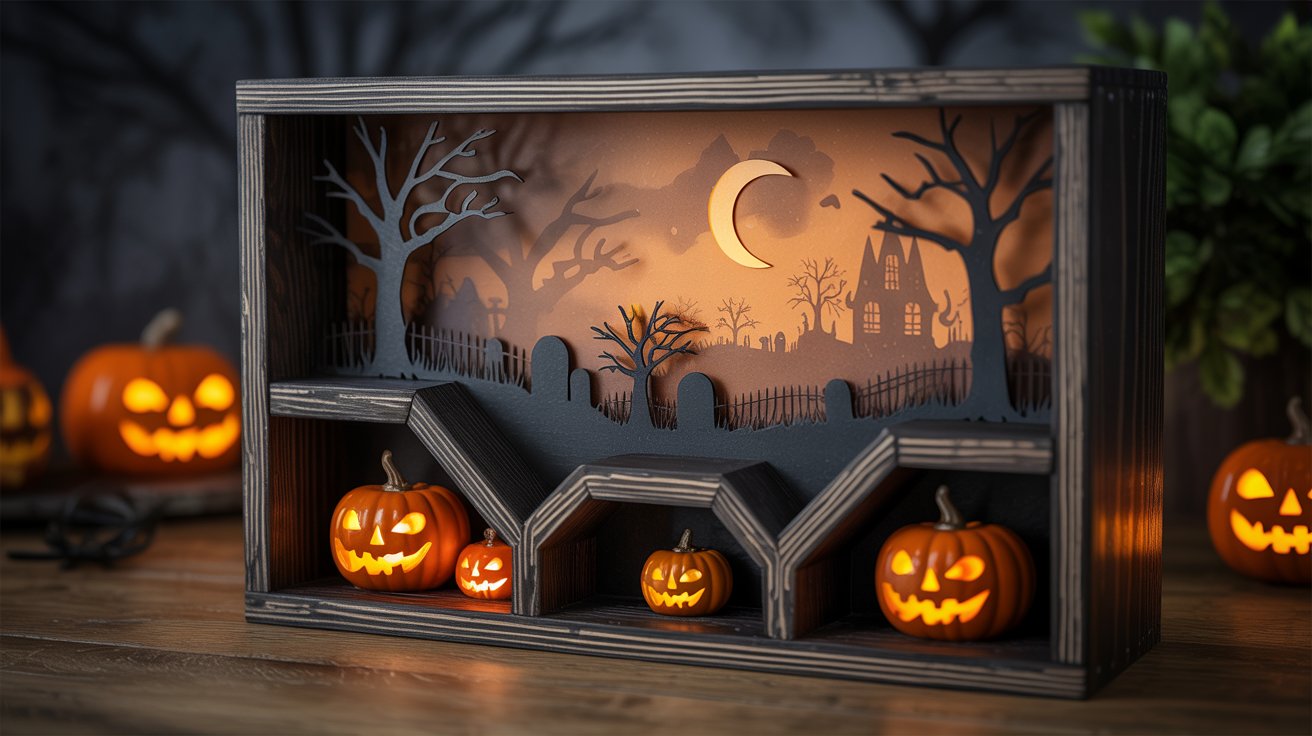
You need: Shadow boxes or trays, plain labels, and a display table. Encourage families to loan one Halloween or fall item—an old photo, a recipe card, a school parade ribbon.
Run it: Host a guided tour. Let residents point to an item and share a short story. Record quotes on notecards and place them beside the objects.
Adaptations: For memory care, use simple prompts: “Who gave this to you?” “What year might this be?” Display items at seated eye level, with even lighting.
7) Spice & Scent Bar
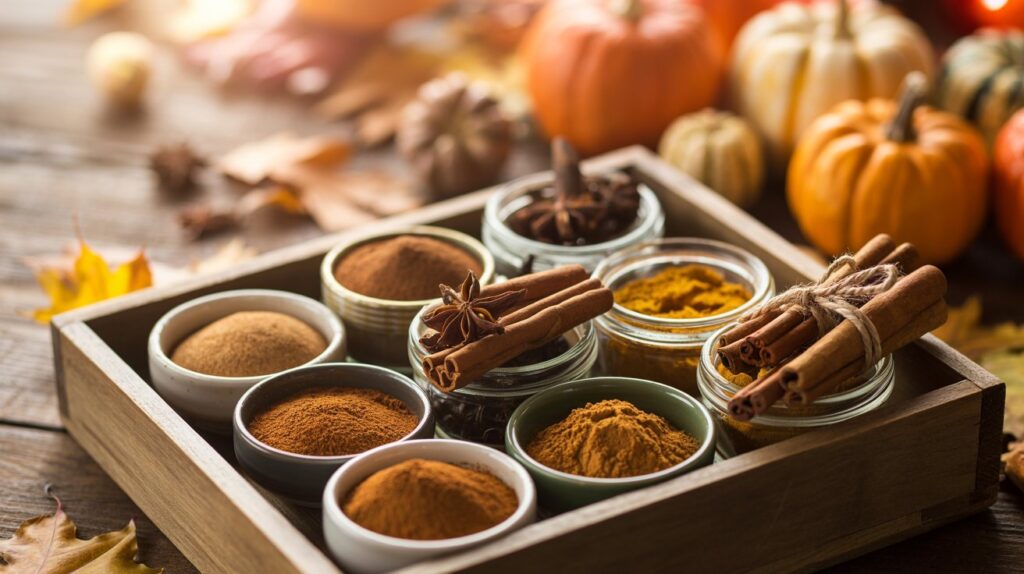
You need: Jars of cinnamon sticks, cloves, star anise, nutmeg, vanilla, dried orange peel, and coffee beans; cotton pads; and small zip bags for take-home sachets.
Run it: Let residents smell, then name memories—baking, church suppers, the good kitchen towel no one could touch. Make simple sachets with muslin squares and ribbon.
Adaptations & safety: Place jars at different heights. For scent sensitivity, keep a “no-smell” table nearby. Label every jar in large print. Keep hand sanitizer available.
8) Pumpkin Bowling—Movement with a Smile
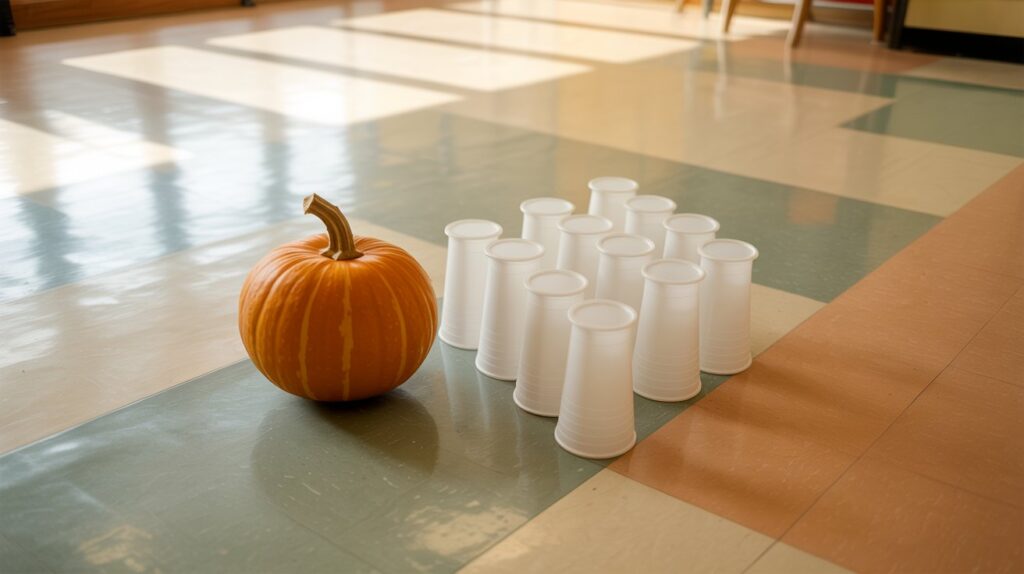
You need: Light plastic pins or recycled soda bottles filled with a bit of sand, a small round pumpkin or foam ball, tape to mark lanes, and a few chairs.
How to run it: Set short lanes (8–10 feet). Players roll from a seated position. Keep score or skip it; laughter counts. Offer a “ramp roll” by using a short board for gentle release.
Adaptations: Wider lanes reduce frustration. Use a beach ball for extra lightness. Provide reachers for pin setup so staff aren’t bending all night.
9) The Mellow Monster Mash (Seated Dance & Stretch)
You need: A playlist, a chair-friendly routine, and water nearby. For curated music personalization, the nonprofit Music & Memory offers guidance on building personal playlists.
Run it: Mix simple seated moves—shoulder rolls, toe taps, claps. Add a standing option near the back of the chair for support. Keep songs to 2–3 minutes with rests between.
Safety: Ask nursing to flag anyone with activity restrictions. The National Institute on Aging has clear movement tips if you want a quick refresher. Hydration pause mid-class, always.
10) Matinee: Cozy Classics, Not Nightmares
You need: A light-hearted seasonal film. Think “Arsenic and Old Lace” or a 1950s comedy—not intense horror. Subtitles help.
Run it: Serve kettle corn and warm blankets. Pause once halfway for a stretch and a short conversation: “Who were your movie stars?” Print a simple film fact sheet.
Adaptations: Keep lighting soft but safe. Provide wireless headphones for those who like louder volume without blasting the room.
11) Trivia & Tall Tales
You need: Large-print trivia cards about fall traditions, candy history, costume trends through the decades, and regional Halloween customs.
Run it: Form small teams. Ask a question, then invite one “tall tale” add-on—someone shares a related personal story for bonus points. It’s half trivia, half oral history.
Adaptations: Use a microphone. Offer picture-based questions for folks with memory challenges. Keep a whiteboard list of team names for fun.
12) Kindness Cauldrons—Treats for Staff and Neighbors
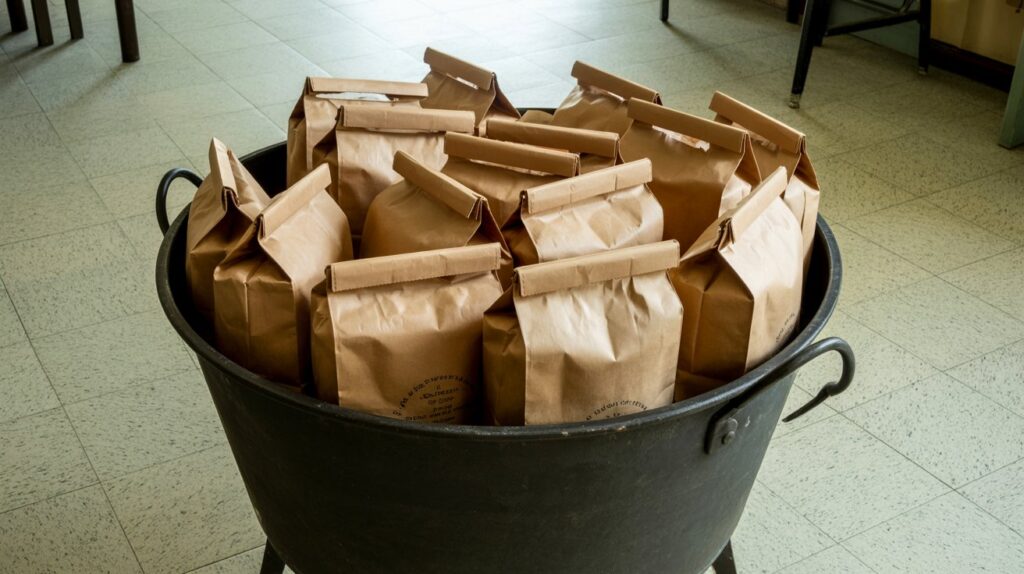
You need: Small paper bags, fillers (stickers, tea bags, sugar-free candy, wrapped caramels, thank-you notes), and a big bowl—your “cauldron.”
Run it: Residents assemble treat bags for housekeeping, dining, delivery drivers, or the elementary school next door. Add handwritten notes: “Thanks for your smile.” Host a short gratitude circle after.
Adaptations & safety: Seat people in pairs. For dexterity issues, pre-portion items in cups. Confirm any outside deliveries with admin for timing and infection control.
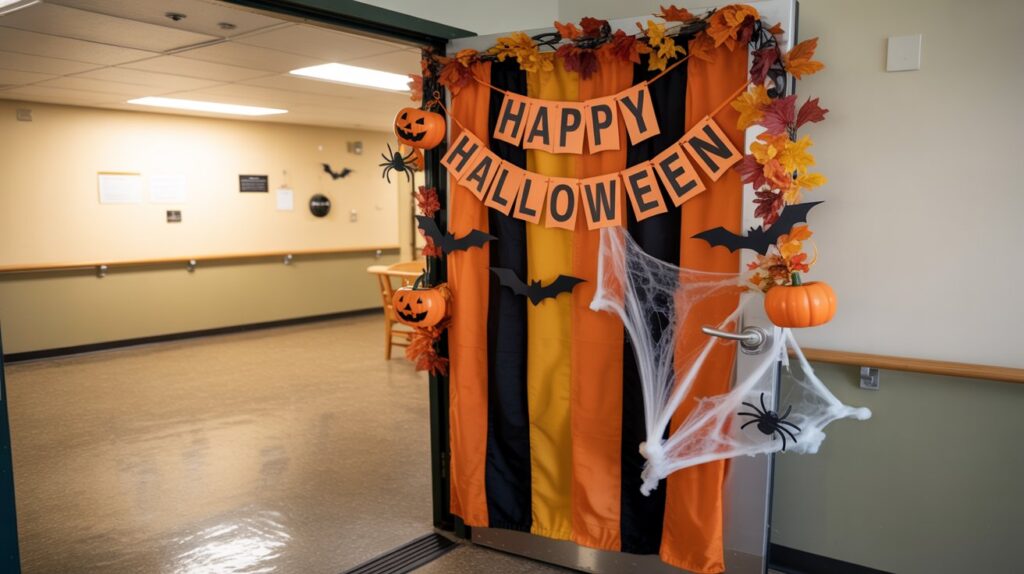
13) Door Décor Contest—Soft Competition, Big Pride
You need: Pre-cut shapes, removable hooks (3M-style), painter’s tape, ribbon, paper garland, and a judging card with big checkboxes: “Clever,” “Cozy,” “Colorful.”
Run it: Set a 30–45 minute window. Staff or volunteers assist with hanging. Invite residents to vote, or appoint a neutral team of judges. Announce winners with real prizes: extra dessert, a framed certificate, or a photo in the newsletter.
Safety: No ladders for residents. Keep hallway clearance wide for mobility devices. Avoid anything dangling below doorknob height.
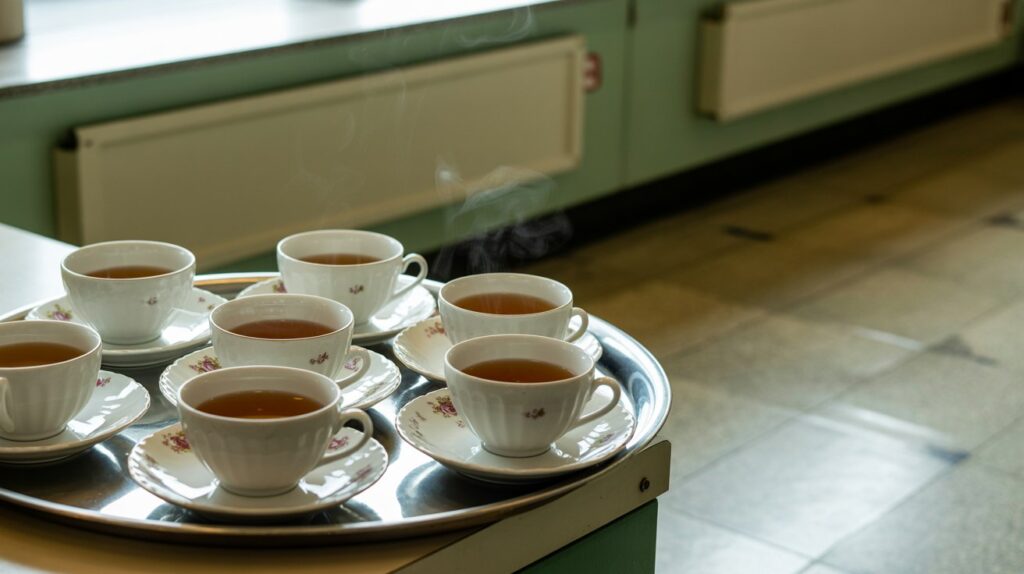
14) Haunted Tea Tasting (Herbal and Calm)
You need: Caffeine-free teas—chamomile, rooibos, cinnamon apple; honey sticks; lemon; and carafes labeled in large print.
Run it: Pour small tastings, then ask for “tea notes” in plain language: “warm,” “spiced,” “too floral.” Pair with shortbread or soft biscotti.
Safety: Coordinate with nursing on med interactions and swallowing concerns. Keep sugar substitutes handy. Offer a cool option for anyone who avoids hot drinks.
15) Shadow Puppet Theater
You need: A portable projector or bright flashlight, white sheet, black paper cutouts on sticks, and a simple script (cat meows, a witch hat, a friendly ghost).
Run it: Residents hold silhouettes while a narrator reads short lines. Keep scenes under three minutes. End with audience claps for every performer.
Adaptations: Velcro handles on sticks help grip. Offer seated “puppet captains” near the screen so movements are small and easy.
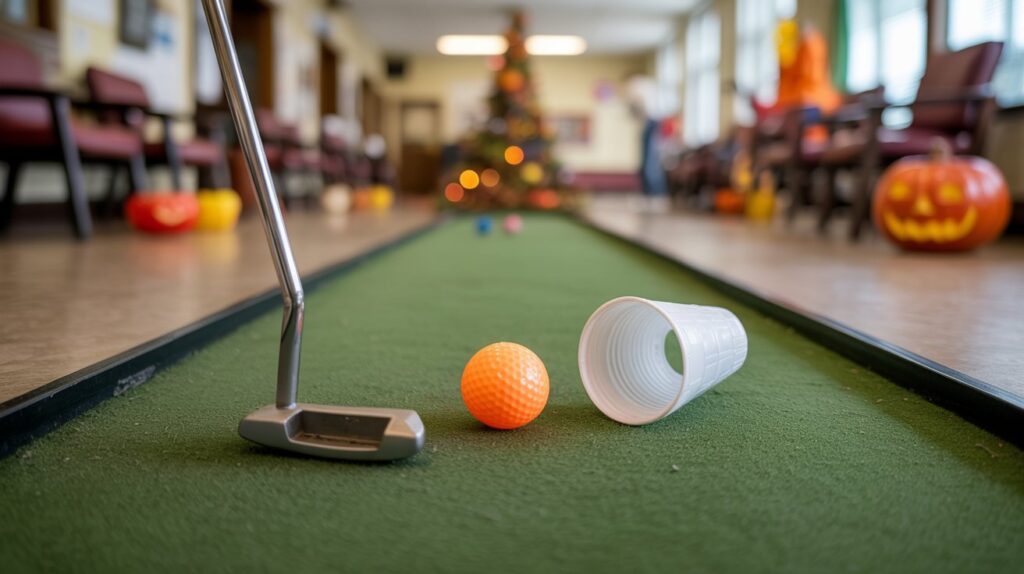
16) Pumpkin Patch Putting Green
You need: A few putters, foam balls, and orange balls as “pumpkins” (place a green felt leaf on each cup). Mark 6–8 foot putts with tape.
Run it: Residents take two shots per hole. Keep a bell for “hole in one!” Give tiny ribbon awards. You can just use a plastic cup as the hole. This way you can move the hole around the create different courses. Just lay the plastic cup on its side with a back stop.
Adaptations & safety: Use extra-wide cups. Provide a seat at every hole. A volunteer ball-retriever saves backs and keeps things moving.
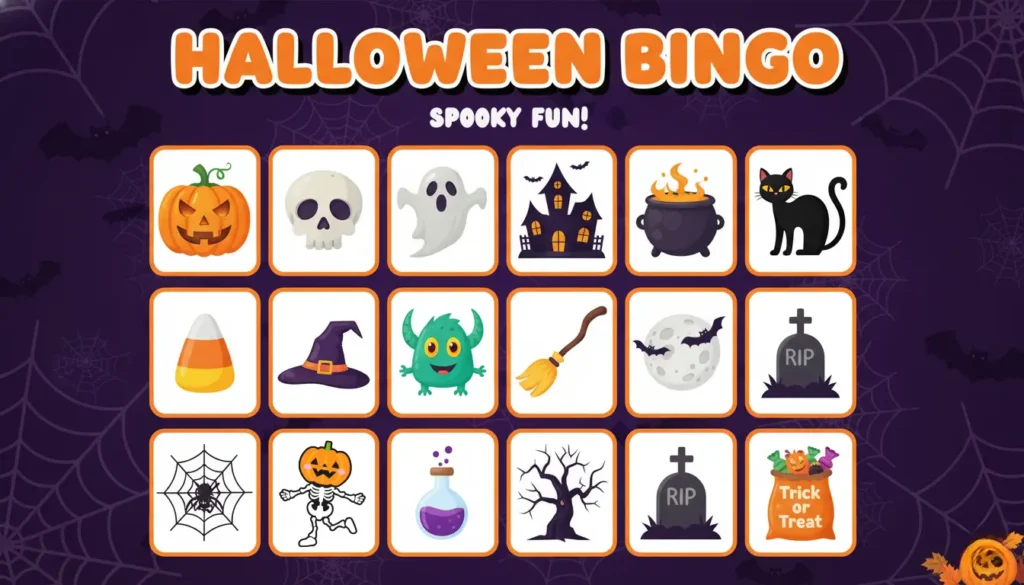
17) Halloween Bingo—With a Twist
You need: Picture-based bingo cards with icons (black cat, corn stalk, moon). Chips large enough to pick up easily. A small prize table—cozy socks, puzzle books, lip balm.
Run it: Call two ways: say the word and describe the picture. Add a bonus round where players trade one chip with a neighbor—instant social moment.
Adaptations: Offer high-contrast cards. Use a wireless microphone. Keep rounds brisk so attention doesn’t drift.
18) The Quiet Room—A Calming Counterpoint
You need: Low lights, soft chair seating, nature sounds, and a “comfort cart” with warm washcloths, hand lotion, and fidget blankets.
Run it: Open during all major Halloween events. Residents can step in for five minutes and return refreshed. Post a friendly sign: “Need a breather? Come on in.”
Adaptations & safety: This room especially supports those living with dementia or anxiety. Keep it staffed. Avoid strong scents. Gentle check-ins only—silence is the point.
19) Intergenerational Trick-or-Treat Pathway
You need: A one-way route with seated candy stations; small, wrapped treats; allergen-free options; and clear directions for families.
Run it: Invite a local school, scout troop, or faith group at a specific time window. Residents hand out treats or stickers. A photo stop at the end captures mixed-age smiles.
Adaptations & safety: Space tables for mobility devices. Keep hand hygiene stations at entry and exit. If you need general safety guidance or checklists, the American Red Cross has helpful resources, and broader wellness tips live at the AARP site.
You need: Electric fireplace or a “campfire” of LED candles in a circle, flashlights for dramatic reading, and a short list of cozy stories or poems.
Run it: Lights down, voices up. Read a gentle piece (not gory), then do a gratitude round: one sentence each. End with a group song—“You Are My Sunshine” still works in October.
Adaptations: Provide large-print scripts. Keep the circle wide for chairs and scooters. Offer warm cider refills before lights up.
Helpful Sidebars That Make Everything Easier
Volunteer Roles That Actually Help
Give volunteers clear jobs: “photo helper,” “paint table re-set,” “tea pourer,” “quiet room host,” “pathway guide.” Specific roles reduce milling around and increase meaningful contact. A five-minute orientation—where to stand, who to call for help—saves your energy during showtime.
Music that Feels Familiar
Pull from residents’ decades. Big Band, 1950s crooners, early rock, or country classics. You don’t need spooky tracks for Halloween vibe; a mellow score behind crafts sets a kinder scene. For building personalized playlists, the nonprofit Music & Memory is a trusted starting point.
For Memory Care—The Gentle Rule of Thumb
Think short segments, clear visuals, soft sounds, and frequent cues. Avoid masks and loud surprises. If families ask for tips, the Alzheimer’s Association has plain-language guidance on communication and comfort that’s easy to share.
Supplies to Keep on a Rolling Cart
Large-print signs and name tags
Painters tape, scissors (staff only), and a small toolbox
Battery check kit for flameless candles
Hand sanitizer, disinfectant wipes, gloves
Extra readers (1.5–2.5), foam grips, adaptive scissors
Minute-by-Minute Templates You Can Copy
Sample 60-Minute Craft Block
0:00–0:10: Welcome and demo at one table. Show a finished sample.
0:10–0:35: Work time. Two floaters assist. Quiet playlist on.
0:50–1:00: Clean-up relay and “What should we try next time?”
Sample 45-Minute Movement Block
0:00–0:05: Seated warm-up and check-ins.
0:05–0:30: Three-song set with rests and water.
0:30–0:40: Cool-down stretches and breathing.
0:40–0:45: Thank-yous, smiles, and a treat to go.
Little Fixes That Save Big Headaches
Visuals, Wayfinding, and Noise
Post large arrows for event flow. Put a “quiet corner” sign near soft chairs. Keep background music about conversation level. If you’ve ever tried to chat over a blaring speaker, you know why this matters.
Food and Medication
Print ingredient cards with large fonts. Sugar-free and soft snack choices should always be right next to standard treats. When in doubt, ask nursing for a quick green light on what you’re serving.
Mobility First, Always
Set chairs with space for walkers and wheelchairs at the ends, not the middle. Make sure every activity can be done seated. A chair at each station is a simple sign that everyone’s included.
Seasonal Touches Without Extra Work
Decor that Doesn’t Trip Anyone
Think high and light—garlands, window clings, and door hangers. Skip rugs, cords, and low props. Removable hooks save your paint and your budget.
Photos and Family Follow-Up
With permission, email a few photos to families with a warm note and next month’s calendar. When relatives see mom’s pumpkin or dad’s big grin in the costume hat, guess what? They show up more.
Quick Reference Links
For extra tips or staff handouts, these are reliable, plain-language resources:
Halloween in a senior setting isn’t a production; it’s a series of small, thoughtful moments. A warm mug. A familiar song. A sturdy chair pulled a little closer. Honestly, that’s where the magic sits.
Pick five activities that fit your crowd and your calendar—maybe Pumpkin Paint & Sip, the Costume Parade, the Spice & Scent Bar, Bingo with a Twist, and a Fireside Goodnight. Add the Quiet Room as a safety net. Build short staff roles that make sense. Then trust the rhythm of the room. People will tell you what they want next—sometimes with words, sometimes with a look at the cider kettle.
And if you ever wonder, “Is this too simple?”—remember: simple is how memories surface. A painted pumpkin can say more than a dozen decorations. You’ve got this. Happy Halloween.
Browse thousands of Senior Centers from around America. Senior Centers are an integral part of society and are the center of life for many seniors and aging adults.
Find a Senior Center which fits your needs using our search feature and keep up to date on all the latest news.
Advertisers are not endorsed by SeniorCenters.com or any senior center listed. This site is not endorsed by or affiliated with any senior center or organization listed.
To provide the best experiences, we use technologies like cookies to store and/or access device information. Consenting to these technologies will allow us to process data such as browsing behaviour or unique IDs on this site. Not consenting or withdrawing consent, may adversely affect certain features and functions.
Functional
Always active
The technical storage or access is strictly necessary for the legitimate purpose of enabling the use of a specific service explicitly requested by the subscriber or user, or for the sole purpose of carrying out the transmission of a communication over an electronic communications network.
Preferences
The technical storage or access is necessary for the legitimate purpose of storing preferences that are not requested by the subscriber or user.
Statistics
The technical storage or access that is used exclusively for statistical purposes.The technical storage or access that is used exclusively for anonymous statistical purposes. Without a subpoena, voluntary compliance on the part of your Internet Service Provider, or additional records from a third party, information stored or retrieved for this purpose alone cannot usually be used to identify you.
Marketing
The technical storage or access is required to create user profiles to send advertising, or to track the user on a website or across several websites for similar marketing purposes.