Here’s the thing: Athens is ancient, busy, and full of steps—yet it’s surprisingly kind when you plan it right. You can see the headline sights without sprinting, eat well without hunting for reservations, and find shade, seating, and steady transport almost everywhere. The trick is pacing. Think “two anchors a day,” not a whirlwind checklist. You know what? That slower rhythm turns the city from loud to lovely.
Why Athens, and why now?
Because the stories are still in the stones. Because cafes spill into the streets. Because the light at sunset makes marble look warm, not cold. Athens charms in shoulder seasons—April–May and late September–October—when days are mild, crowds thin, and hills feel friendlier. Summer can be hot; mornings and evenings work best. Winter brings quiet museums and soft prices, with a sweater-friendly breeze.
Athens is also well connected for side trips. Ferries from Piraeus whisk you to islands. The tram slides you to the coast around Glyfada. If you want a big city and a breezy seaside in one week, Athens plays both roles.
Where should you stay without overthinking it?
Pick comfort, then proximity. Staying near Syntagma, Plaka, or Koukaki puts you within short, fairly flat walks to major sights. Plaka is postcard-cute, though some lanes tilt uphill. Koukaki sits near the Acropolis Museum and feels calmer. Syntagma links you to the Metro and airport bus. If you like upscale calm and good cafes, Kolonaki is polished and a bit hilly but charming. Look for elevators, step-free access, and solid air-conditioning in your hotel notes—the basics matter more than boutique flair.
Helpful hotel links near the main zones (Google Maps searches):
Small note: Athens is big, yet compact where it counts. Most first-timer highlights form a triangle you can navigate in short rides or pleasant strolls.
Getting around without drama
- Metro: Clean, reliable, and clearly signed in English. Stations like Syntagma, Acropoli, and Monastiraki serve the central sights. Many platforms are elevator-equipped, though not every elevator is working every hour—so allow a little cushion.
- Tram: Runs to the coast toward Glyfada. Check official timetables at STASY (Tram).
- Taxis / rides: Use FREE NOW (formerly Beat) to hail licensed taxis with transparent pricing—handy when you’ve already walked your steps for the day.
- Buses: Useful but less intuitive than Metro. If you’re app-friendly, Moovit or Google Maps give live routes.
- Walking: Sidewalks can be uneven. Good shoes with grip help. Cross with care; lights matter here.
A quick accessibility note: the Acropolis has an elevator for visitors with mobility needs. Hours and operations can vary; ask your hotel to confirm the day before.
The classics, the easy way
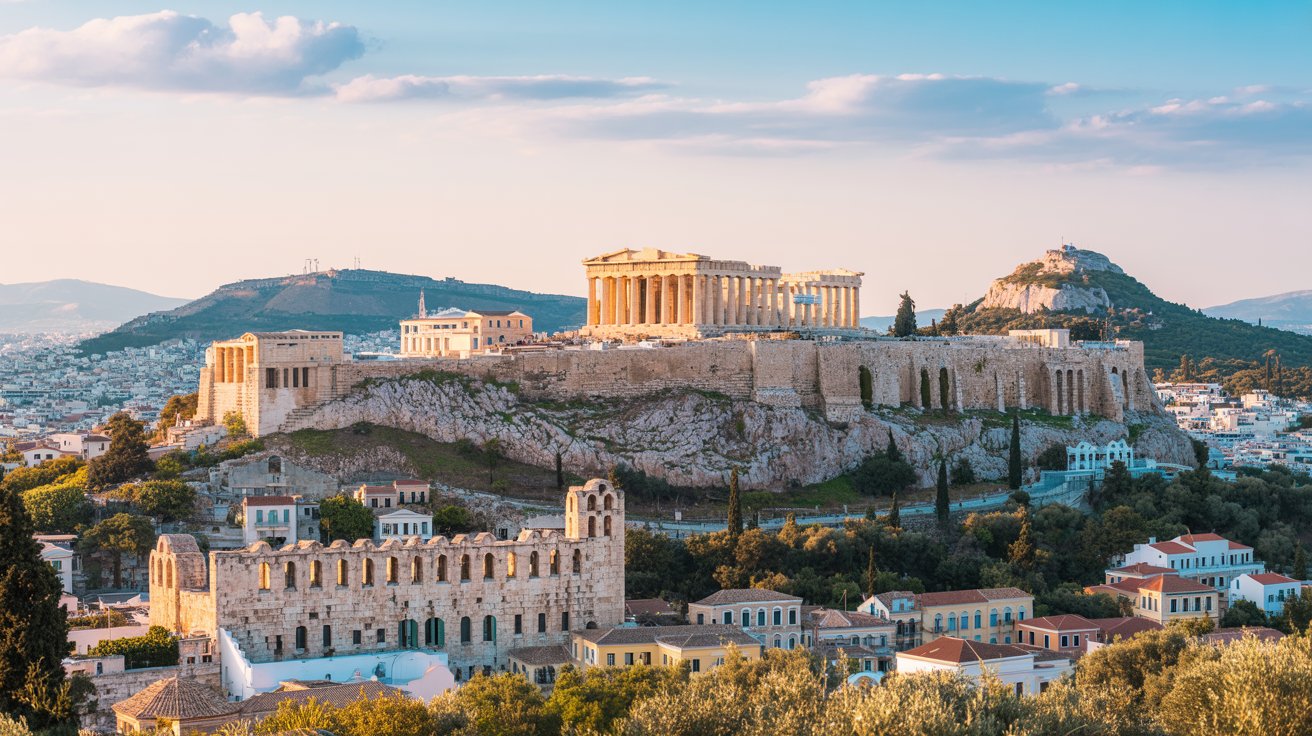
Acropolis Museum & Acropolis Hill (e-tickets) are the heart of the story. Start at the museum first—cool, flat, and clearly laid out. It frames what you’ll see on the hill, and it has seating and a gentle flow. After a break and a coffee on the terrace, you can gauge whether the hill feels right that day. If yes, go in the late afternoon for softer sun and gentler crowds.
Ancient Agora pairs history with greenery. It’s flatter than the Acropolis and gives you the Temple of Hephaestus—one of the best-preserved temples anywhere. Benches appear like little mercies under olive trees.
Changing of the Guard at Syntagma (Hellenic Parliament) is a short, dignified moment. If standing is tough, arrive a bit early to snag a low-effort vantage point near a railing.
Sunset without the climb? Take the Lycabettus Funicular to Mount Lycabettus. The view peels back the city like a map.
Museums that love a slower pace
Plan one museum per half-day. When your brain says “enough statues,” listen. Take a walk, browse a bookshop, sit with a freddo cappuccino like a local.
Food: hearty, fresh, and un-fussy
Greek food is made for lingering. Horiatiki (country salad), grilled fish, slow-braised lamb, yellow split pea fava, and zucchini fritters—simple dishes, big taste. If you prefer gentle flavors and soft textures, look for oven-baked mains like moussaka or gemista (stuffed tomatoes and peppers). For dessert, try loukoumades (warm honey-dipped dough puffs) or a small square of galaktoboureko (custard pie). Coffee culture runs deep: a frappé for nostalgia, a freddo cappuccino if you like cold and creamy.
Early dinners are absolutely fine; while locals eat late, many tavernas welcome you at American-friendly hours. If your joints prefer cushioned chairs, peek at the seating before you commit. And yes, you can ask for tap water, though bottled often appears by default.
Safety and comfort, handled
Athens is lively and generally safe. Crowded Metro cars and touristy squares can attract pickpockets. Keep bags closed and in front of you. Use hotel safes for passports; carry a photocopy or a phone scan. Hydration matters more than you think—heat can sneak up on anyone. A hat, light scarf, and small sunscreen stick are unsung heroes.
Cash and cards both work. Contactless payments are common, but carry a little cash for small cafes or tips. Your bank card should function at ATMs in central areas; look for machines attached to banks.
Gentle day trips that don’t feel like a marathon
- Hydra (island, no cars): a ferry ride from Piraeus and then slow, fragrant lanes you’ll swear were painted that morning. Great for strolling and seaside lunches.
- Cape Sounion (Temple of Poseidon): sunset views and a short, steady walk to the temple. Book a small-group tour or a taxi out and back; less hassle, more sky.
- Nafplio (if you want a full day): elegant Old Town, marble sidewalks, and cafe-lined squares. The big fortress is stair-heavy, but the town itself is easygoing.
If motion sickness is a concern on ferries, bring ginger chews or medication your doctor recommends. Pick tours that state “small group” or “private” for a set pace and easy logistics.
Tech and tools that make it simple
Bring a portable phone battery; you’ll use maps, photos, and messages more than you expect.
A light talk about stairs and slopes
Athens can be hilly, especially around Plaka and Anafiotika. If steps aren’t your friend, let taxis do the climbing. Ask your hotel which routes to the Acropolis Museum are flattest; locals know the sidewalks that roll instead of rise. And if your knees surprise you mid-trip, give yourself a “museum and meze day.” You won’t miss out; you’ll end up with your own Athens—one that’s less about miles, more about moments.
What about healthcare or meds?
Carry your prescriptions in original containers and a simple list of generic names. Travel medical coverage is a smart add-on. Pharmacies are common and helpful; staff can often guide you to over-the-counter relief for minor aches or stomach grumbles. If you need a clinic, your hotel can call and point you to reputable options.
Small shopping, big memories
Olive oil, mountain tea, honey, spices, and handmade ceramics travel well. Skip heavy marble statues unless your suitcase is ready for weight training. For something tiny and lasting, look for sterling worry beads or a simple blue-and-white charm.
A gentle 3-day Athens plan (with room to breathe)
Day 1 – Settle and savor
Morning / Early Afternoon: Arrive, check in, and nap if you need it. Take a relaxed walk through Plaka. Find a cafe with shade.
Late Afternoon: Acropolis Museum. Two hours is enough for a first pass. A coffee on the terrace with the Parthenon in view feels like a welcome ceremony.
Evening: Light dinner near Koukaki. Sleep early, body clock willing.
Day 2 – History, but nicely paced
Morning: Acropolis Hill (timed entry) in the first opening hour or late afternoon if you prefer cooler light. Use the elevator if mobility is a concern—ask staff for directions near the entrance.
Midday: Long lunch. You’ve earned the tomatoes and feta.
Afternoon: Ancient Agora for a slower, greener wander.
Evening: Taxi to the Lycabettus funicular. Sunset view. Simple dinner nearby or back in the center.
Day 3 – Choose your flavor
Choice A (Coast): Tram to the seaside (check times). Flat promenade, a seafood lunch, and maybe a quiet hour with a book around Glyfada.
Choice B (Museum + Shop): National Archaeological Museum in the morning, then a break. Light shopping around Syntagma and a sweet stop for loukoumades near Monastiraki.
Choice C (Short Escape): Half-day to Sounion for the temple and big skies; back by dinner.
This plan looks spare on paper. In practice, it fills the day without draining you. And if you’re feeling spry? Swap a cafe hour for a guided food walk or a short neighborhood tour.
Eat like you mean it (with gentle stomachs in mind)
If you prefer mild, tell your server. Greek kitchens can ease the garlic, adjust the oil, or suggest something baked and tender. Try baked cod with garlic dip (skordalia) if you like bright flavors without heavy spice. Share plates to sample more with less volume. And yes, try the house wine by the glass; it’s a friendly way to toast the evening without committing to a bottle.
Seasonal notes you’ll actually use
- Spring (Apr–May): Blooming hills, jacket in the evening. Great light for photos, and citrus scents can catch you by surprise on quiet streets.
- Summer (Jun–Aug): Start early, break midday, resume after 5 p.m. Book places with strong A/C and shade on terraces. Hydration is queen.
- Fall (Sep–Oct): Warm days, cool nights. Sea still swimmable. A cardigan covers most situations.
- Winter (Nov–Mar): Fewer crowds, possible rain, clear museum days. A lightweight rain shell and closed-toe shoes make life easier.
Packing, but keep it real
- Comfortable walking shoes with grip (the marble can be slick)
- Collapsible sun hat; travel-size sunscreen stick
- A small crossbody bag that zips and stays in front
- Light scarf or wrap (shade, warmth, church visits)
- Medication list and a few extra days of pills, just in case
- Portable phone charger and universal plug adapter
A quick word on money and tipping
By U.S. standards, tipping in Greece is modest. Round up, or add a few euros for good service. For taxis, rounding up the fare is common. If someone goes above and beyond—extra help with a bag or a special table—show it with a smile and something small.
A tiny detour on language
“Hello” is Yassas (formal). “Please” is Parakaló. “Thank you” is Efcharistó. People appreciate the effort. You might get a warmer grin than the weather.
Common worries, answered quickly
- Will I manage the Acropolis? With good shoes, breaks, and maybe the elevator—very likely, yes.
- Is the food heavy? It can be, but plenty is fresh and bright. Grilled fish, salads, and vegetable casseroles are gentle.
- Do I need cash? Some, yes. Cards are accepted widely.
- Is it noisy at night? Pick a quiet-rated hotel or ask for a courtyard room. Earplugs never hurt.
If you want a guide without the shuffle
Consider a small-group or private guide for a couple of hours at the Acropolis or the museum. You’ll get context without the rush. Platforms like GetYourGuide or Viator list options, but your hotel concierge often knows guides who match your pace and interests—history, art, archaeology, or even food stories.
The feeling you’ll take home
Athens is old stone and new chatter. It’s street cats and church bells. It’s a waiter placing an extra slice of orange because you reminded him of his aunt. The city can feel big. Then a tiny lane opens, and a vine leans over a balcony, and you’re suddenly right-sized in the best way.
A pocket, no-stress checklist before you go
- Book a central hotel with elevator and strong A/C; ask about step-free access
- Plan two “anchors” per day (e.g., one museum + one view), nothing more
- Reserve a sunset slot—Lycabettus funicular or Sounion—on your calmest day
- Download FREE NOW and Moovit; pack a phone charger and hat
- Confirm the Acropolis elevator if you’ll need it; bring your ID or note if required
- Carry a little cash; keep a card handy for contactless fares and cafes
Honestly, that’s it. Athens rewards a light, thoughtful plan. Keep your mornings gentle, your afternoons shaded, and your evenings slow. Tell a server you’re taking your time. Watch the color change on the Parthenon as the sun slides down. Then raise a glass and think, “Yes—this is exactly the pace I wanted.”