Christmas lights go up, music floats through stores, and everyone seems to have somewhere to be. But for many older adults, the season doesn’t feel like a warm reunion—it feels like a spotlight on what’s missing. A spouse who’s gone. Kids who live far away. Friends who can’t drive anymore. Traditions that used to fill the house, now reduced to quiet rooms and long nights.
Holiday loneliness is real, and it hits hard because it mixes grief, isolation, and the pressure to “be merry.” The good news is that senior centers all over the country quietly solve this problem every December. They don’t just host events—they create belonging. They offer routines, friendships, rides, meals, laughter, and something that feels a lot like family. This article explains why the holidays amplify loneliness, what senior centers do that works, and how to plug into that “second family” even if you haven’t gone before.
Why Christmas can feel lonelier as we get older
Loneliness isn’t just “being alone.” It’s the ache of feeling disconnected from people who matter. And the holidays can magnify that ache for a few very human reasons:
1. Grief comes back in waves
Even if a loss happened years ago, Christmas has a way of reopening the memory. The empty chair at dinner. The ornament you can’t hang without crying. The songs that used to make you smile, now making you tear up. This is normal grief—not weakness. But it can feel isolating when everyone else seems to be celebrating.
2. Social circles shrink
As people age, friends move, health changes, and daily routines get smaller. If you no longer drive at night or you’re recovering from illness, you lose the casual places where connection used to happen. By December, that can translate into days—or weeks—without meaningful conversation.
3. Family dynamics change
Lots of families love each other deeply, but still struggle with distance, busy lives, or complicated relationships. Adult children may want to visit but can’t afford travel. Some seniors are “solo agers,” navigating the season without nearby family support. None of this means “no one cares,” but it can still feel like being left behind.
4. The culture sells one story of the holiday
TV, ads, and social media push a single Christmas script: big family gatherings, matching pajamas, loud kitchens, full calendars. When your real life looks different, it can trigger shame or the sense that you’re the only one not doing it “right.”
Loneliness is a health issue, not just a feeling
Research links loneliness and social isolation in older adults to higher risks of depression, anxiety, cognitive decline, and worse physical health outcomes. That’s why many aging organizations emphasize building social connection as part of staying well. Senior centers are one of the most practical ways to do that.
What senior centers uniquely provide during the holidays
A senior center isn’t only a building with activities. It’s a community hub built for older adults—social, educational, supportive, and welcoming. If you want a fuller picture of what counts as a senior center and why they matter, see The Official Definition of a Senior Center.
During Christmas, those everyday strengths become emotional lifelines. Here are the big ways senior centers become a “second family.”
1. They create a place where you’re expected
Loneliness thrives in the feeling of invisibility. Senior centers quietly reverse that. When you show up, people notice. If you miss a day, someone asks where you were. When you walk in, a volunteer might already be pouring coffee because they remember how you take it. Being expected is a powerful antidote to isolation.
2. They offer holiday rituals without the pressure
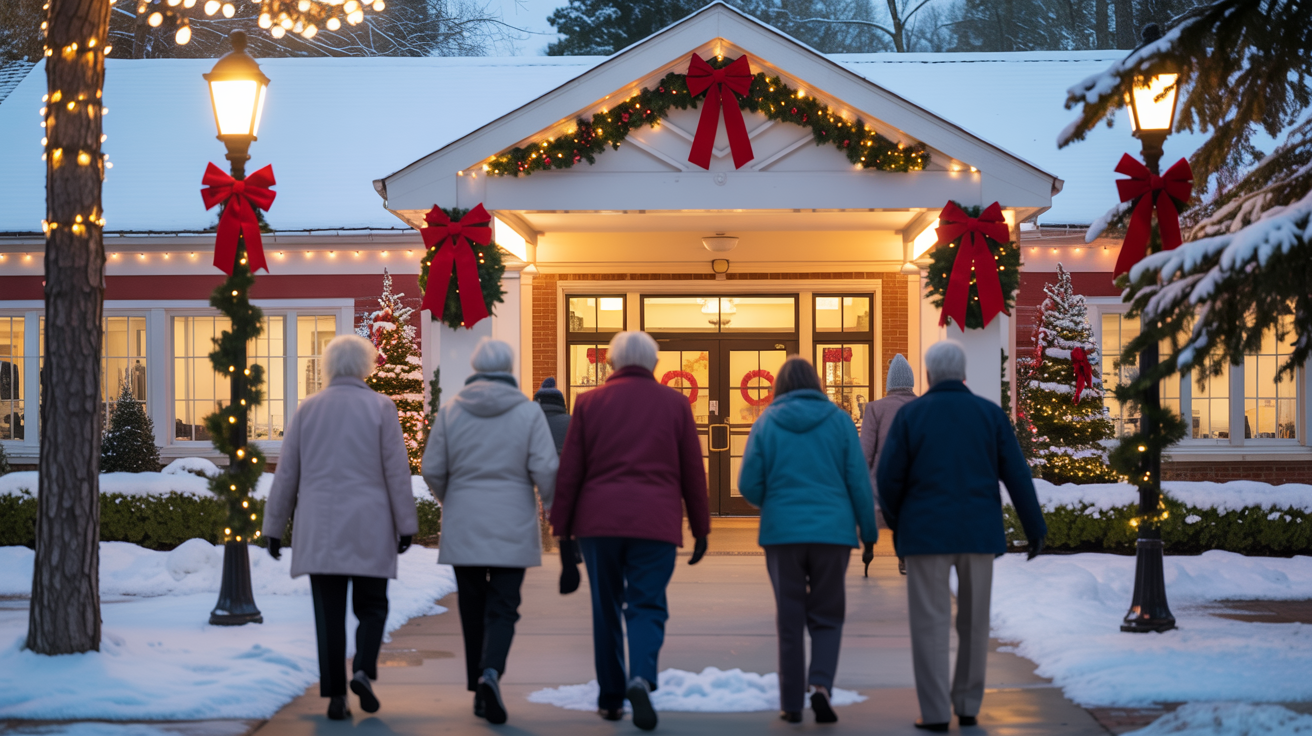
Centers often host tree lightings, carol sings, cookie swaps, crafts, “ugly sweater” lunches, and Christmas movie afternoons. The difference is the vibe: no performance, no perfect table setting, no guilt about what you didn’t do. You just come as you are and enjoy the moment.
It’s easier to talk when your hands are busy. Decorating ornaments, playing bingo, singing in a group, painting, or baking side-by-side creates a low-pressure door into conversation. Over time, that becomes real friendship: the kind where people check on you, laugh with you, and remember your stories.
4. They make connection accessible
Many centers provide transportation help, volunteer drivers, or partnerships with local transit—so not driving doesn’t mean not belonging. A lot also offer meals or potlucks, which matters because eating alone can deepen sadness. Christmas lunch at a center can feel like a family table again—just with more people who “get it.”
5. They normalize grief without making it the whole story
Senior centers are full of people who have lived through loss. That means you don’t have to explain why this Christmas hurts. You can talk about a spouse or friend who died without feeling like you’re “ruining the mood.” And you can also laugh five minutes later. That’s real healing: grief held inside community.
6. They offer purpose, not just entertainment
Purpose is the secret ingredient to feeling less lonely. Centers often invite members to help set up events, greet newcomers, wrap gifts for charities, or lead a small activity. When someone needs you—even in a small way—you feel anchored again.
7. They connect generations
Many senior centers bring in kids, teens, and families for holiday concerts, card-making, or service projects. Intergenerational programs reduce isolation and also help older adults feel seen by the wider community. If this angle speaks to you, see How Senior Centers Connect Younger Generations & Older Adults.
How a senior center becomes a “second family” (the real mechanics)
“Second family” isn’t just a cute phrase. It happens because senior centers consistently build three basics of belonging:
When those three ingredients are present, connection becomes inevitable. You start recognizing faces. Someone saves you a seat. You swap phone numbers at the cookie table. Then the whole season shifts from “I’m alone” to “I’m part of something.”
If you’ve never gone before, here’s how to start
Step 1: Find a center near you
Use your local listings or start with categories like Social Activities at Senior Centers to see the kinds of programs available. You’re not committing to anything by looking.
Step 2: Pick one low-pressure event
Choose something simple: a Christmas luncheon, craft hour, choir practice, movie day, or even a general “coffee and conversation” morning. It’s easier to walk in when there’s a shared activity to focus on.
Step 3: Go once to “test the water”
Tell yourself: “I’m just trying today.” You don’t need to be outgoing. You don’t need a backstory. You can sit, observe, and leave whenever you want. Most centers are used to new faces in December and will help you ease in.
Step 4: Say yes to a small connection
If someone says hello, say hello back. If someone invites you to sit with them, accept. The first connection is usually small. That’s okay. Repetition does the rest.
Step 5: Ask about rides or access supports
Transportation and mobility barriers are common, and centers often have answers: shuttle routes, volunteer drivers, ADA support, or partnerships with local agencies. Ask once, and your options widen dramatically.
What families and caregivers can do with senior centers
If you’re reading this for someone you love, senior centers can help you too. Here’s how to partner well:
Frame it as community, not a “fix.” Instead of “You need to go so you’re not lonely,” try “I found a place with a great Christmas lunch—want to check it out with me?”
Offer a first visit together. Going with someone the first time lowers anxiety and makes the experience feel safer.
Ask the center about newcomer supports. Many places will pair a new member with a “welcome buddy” or staff host.
Respect autonomy. Encourage, don’t pressure. One positive experience beats ten forced trips.
When loneliness feels bigger than the holidays
Sometimes Christmas loneliness isn’t just seasonal—it’s a signal that isolation has grown over time. If that’s you (or someone you love), a senior center is a strong first step, but not the only one. Pair it with medical or counseling support if depression, anxiety, or complicated grief are hovering in the background.
Resources that fit naturally with senior center support
Senior centers are often the doorway into a whole ecosystem of help. Here are trustworthy resources that work alongside center participation:
Area Agencies on Aging (AAA): Every region has an AAA that can connect you to transportation, meal services, caregiver support, and social programs—including your nearest senior center.
NCOA holiday loneliness tips: The National Council on Aging offers practical ways to reduce holiday isolation and encourages using community spaces like senior centers.
988 Suicide & Crisis Lifeline (U.S.): If loneliness slides into hopelessness or you’re worried about safety, call or text 988 for immediate support. It’s free and available 24/7.
Grief support groups: Many senior centers host grief circles; if not, your AAA or local hospital can point you to groups where people understand loss without trying to hurry you through it.
A Christmas that feels held, not hollow
Loneliness at Christmas doesn’t mean you failed at the holiday. It means you’re human—and you’re carrying real history into a season that’s heavy with memory. The answer isn’t to pretend it doesn’t hurt. The answer is to be with people who can hold both the joy and the grief with you.
That’s what senior centers do best. They offer a door you can walk through on your own terms. They offer familiar faces, shared stories, simple traditions, and an unspoken message: You belong here.
And for many older adults, that belonging becomes the greatest gift of the season—a second family that makes Christmas feel like Christmas again.
Browse thousands of Senior Centers from around America. Senior Centers are an integral part of society and are the center of life for many seniors and aging adults.
Find a Senior Center which fits your needs using our search feature and keep up to date on all the latest news.
Advertisers are not endorsed by SeniorCenters.com or any senior center listed. This site is not endorsed by or affiliated with any senior center or organization listed.
To provide the best experiences, we use technologies like cookies to store and/or access device information. Consenting to these technologies will allow us to process data such as browsing behaviour or unique IDs on this site. Not consenting or withdrawing consent, may adversely affect certain features and functions.
Functional
Always active
The technical storage or access is strictly necessary for the legitimate purpose of enabling the use of a specific service explicitly requested by the subscriber or user, or for the sole purpose of carrying out the transmission of a communication over an electronic communications network.
Preferences
The technical storage or access is necessary for the legitimate purpose of storing preferences that are not requested by the subscriber or user.
Statistics
The technical storage or access that is used exclusively for statistical purposes.The technical storage or access that is used exclusively for anonymous statistical purposes. Without a subpoena, voluntary compliance on the part of your Internet Service Provider, or additional records from a third party, information stored or retrieved for this purpose alone cannot usually be used to identify you.
Marketing
The technical storage or access is required to create user profiles to send advertising, or to track the user on a website or across several websites for similar marketing purposes.