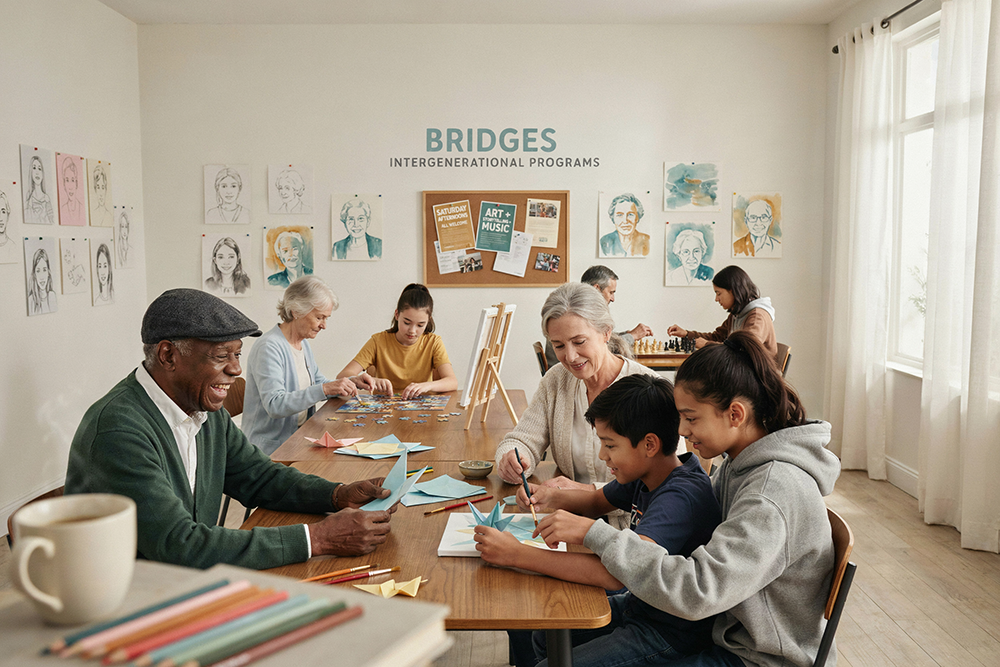
Put a teenager with a smartphone next to a senior with seventy years of stories, and something interesting can happen. One may explain how to organize photographs on a tablet while the other describes what the neighborhood looked like before that teenager’s parents were born. A few minutes later, both may be laughing about how differently they grew up.
Intergenerational programs intentionally bring older adults and younger people together for activities, learning, conversation, and community service. For seniors, these programs can add energy and variety to the week while creating opportunities to share knowledge and learn something new. For younger participants, time with older adults can introduce perspectives, skills, stories, and traditions they may not encounter anywhere else.
Senior centers are especially well positioned to create these connections. They already have gathering spaces, activities, experienced staff, and members with decades of knowledge to share. With thoughtful planning, appropriate supervision, and activities that allow both generations to participate equally, an ordinary senior center afternoon can become an experience everyone talks about afterward.
Why Bring Generations Together?
People of different generations often live surprisingly separate lives. Seniors may spend much of their time with adults near their own age, while children and teenagers spend most of their days at school, sports, clubs, and activities designed for young people.
Intergenerational programming creates a reason for those groups to meet. Instead of simply putting them in the same room, a good program gives everyone something meaningful to do together.
The activity might involve cooking, music, gardening, technology, art, storytelling, reading, games, or community service. What matters is that both generations contribute. Seniors should not feel like passive observers, and young participants should not feel like they are simply completing a required visit.
The most memorable programs create genuine exchange. A teenager may teach a senior how to use a new phone feature. Later, the senior may teach the teenager how to play a card game. Both people leave having learned something.
Activities That Work Across Generations
The easiest activities are those that do not depend heavily on age, speed, or physical ability. Conversation should be able to develop naturally while participants work toward a shared goal.
| Activity |
What Seniors Can Share |
What Youth Can Share |
Senior Center Planning Tip |
| Technology Partners |
Questions, communication goals, photographs, and life experience |
Smartphone, tablet, video calling, and app skills |
Use small groups and written instructions participants can take home |
| Storytelling Projects |
Memories, local history, family traditions, and personal experiences |
Interviewing, recording, editing, and presentation skills |
Prepare conversation prompts so nobody feels put on the spot |
| Gardening |
Gardening knowledge, recipes, and seasonal experience |
Energy, physical assistance, photography, and project documentation |
Use raised beds and tasks suited to different mobility levels |
| Cooking and Baking |
Recipes, techniques, and family food traditions |
New food ideas, decorating, and digital recipe organization |
Choose simple recipes and clearly assign safe tasks |
| Art and Crafts |
Traditional crafts, sewing, painting, and creative techniques |
Contemporary styles, digital art ideas, and new materials |
Select projects that allow individual creativity rather than identical results |
| Games |
Cards, chess, checkers, dominoes, and classic games |
Newer board games, trivia, and age-appropriate digital games |
Create mixed teams instead of dividing participants by age |
| Community Service |
Organization, mentoring, community knowledge, and practical skills |
Energy, new ideas, and additional hands for projects |
Choose a project with a visible result everyone can celebrate |
Technology Can Be a Perfect Starting Point
Technology programs provide one of the most natural opportunities for intergenerational learning. Many young people are comfortable navigating smartphones, tablets, messaging applications, photographs, and video calls simply because they have grown up using them.
A senior might arrive with a practical goal: learning how to send photographs, join a family video call, enlarge text, organize contacts, or recognize suspicious messages. A younger partner can work through the task one step at a time.
The program works best when the senior controls the device rather than handing it over. The younger participant can explain where to tap while the senior practices. This turns a quick fix into a skill that can be used again later.
The exchange should not remain one-sided. After the technology portion, allow time for seniors to teach something in return. That might be a card game, recipe, craft, historical story, or practical skill.
Turn Life Stories Into a Shared Project
Seniors have stories that younger generations may never hear unless someone asks. An intergenerational oral history project can provide that opportunity.
Young participants can interview seniors about childhood, school, first jobs, music, family traditions, military service, careers, neighborhood changes, travel, inventions, or historical events they remember personally.
The goal does not need to be creating a formal biography. A ten-minute recorded conversation about someone’s first car or favorite childhood holiday can become a meaningful piece of family or community history.
With permission, participants might turn interviews into a booklet, audio collection, video presentation, or senior center exhibit. Younger participants can help with recording and editing while seniors provide the stories.
Always allow participants to skip questions or topics they would rather not discuss. The experience should feel enjoyable, not intrusive.
Bring Generations Together Through Food
Food gives people an immediate reason to talk. Recipes also carry stories about families, cultures, celebrations, neighborhoods, and traditions.
A senior center could invite older adults to bring favorite recipes and pair them with younger participants. Together they can prepare simple dishes, create recipe cards, or assemble a community cookbook.
Seniors might teach techniques that younger participants have never tried. Young participants could help photograph the finished dishes or type handwritten recipes into a digital format.
A tasting event at the end can bring families and other senior center members into the program. Suddenly, a cooking activity becomes a larger community celebration.
Games Can Remove the Pressure to Make Conversation
Sometimes the hardest part of an intergenerational program is the first five minutes. Participants may wonder what they are supposed to say to someone decades older or younger than themselves.
Games solve much of that problem. Everyone has something to concentrate on, and conversation develops naturally.
Seniors can teach classic card games, dominoes, chess, checkers, or other favorites. Younger participants can introduce newer board games or age-appropriate digital games.
Mixed teams can make the experience especially enjoyable. Instead of “seniors versus youth,” pair generations together. Friendly competition can create laughter without turning age into the dividing line.
Create a Music Exchange
Every generation has music it believes everyone else should hear. That makes music ideal for an intergenerational activity.
Ask seniors and youth to choose favorite songs from their generation. Play short selections and let each person explain why a particular song matters to them.
Seniors may remember dances, concerts, weddings, road trips, or other moments connected to older songs. Younger people can introduce current music and explain the artists or trends they enjoy.
The senior center could eventually create a shared playlist containing selections from every generation represented in the program.
A live music component can work as well. Participants who play instruments can perform together, or groups can organize a sing-along using songs familiar across age groups.
Build Something Together
Projects with visible results create a strong sense of accomplishment. A senior center could organize a community garden, mural, photo display, holiday decoration project, birdhouse workshop, or neighborhood beautification day.
Different tasks allow people with different abilities to contribute. Someone may paint while another measures. One participant may plant while another creates labels. Someone else may photograph the project and document its progress.
At the end, everyone can point to something and say, “We made that together.”
That shared ownership can be more powerful than an activity where participants meet once and never see the results again.
Volunteer Side by Side
Intergenerational programs can also focus outward by helping someone else. Seniors and youth might assemble care packages, organize a food collection, create greeting cards, prepare donation kits, or support a local community project.
Seniors may bring organization, leadership, and knowledge of community needs. Younger volunteers bring enthusiasm and different ideas. Working toward a common goal often makes age differences fade into the background.
Senior centers should choose projects that allow everyone to contribute comfortably. Heavy lifting should never be necessary for participation.
A completion celebration can help reinforce the achievement. Share the number of packages assembled, cards created, items donated, or people helped so everyone understands the impact of the work.
Use Family Gatherings as a Simple Intergenerational Model
An intergenerational program does not always require a school bus filled with students. Families can provide a smaller starting point.
Grandchildren, great-grandchildren, nieces, nephews, and younger relatives can join senior center members for selected activities. Family game days, seasonal crafts, cooking demonstrations, or storytelling events can introduce the concept without requiring a large outside partnership.
The SeniorCenters.com article Inviting Friends and Family over for a Get together includes additional ideas for bringing different generations together through games, food, photographs, music, and conversation.
Once a center sees which activities generate interest, similar programs can be expanded through schools, youth organizations, libraries, or community groups.
Partner With Schools and Youth Organizations
Senior centers do not need to build intergenerational programs alone. Local schools, youth clubs, libraries, recreation departments, colleges, volunteer organizations, and faith communities may already have young people looking for community projects.
Begin with a clear proposal rather than a general request for youth volunteers. A school is more likely to understand an invitation such as “We would like twelve students to participate in a six-week technology partner program” than “Send some students to visit seniors.”
Explain the dates, length of sessions, number of participants, activities, supervision arrangements, and what each group will gain from participating.
Starting small is usually easier. A successful pilot program can always be expanded later.
Plan for Safety Before the Fun Begins
Programs involving minors require thoughtful supervision. Senior centers should follow applicable organizational policies, local requirements, partner-school procedures, and safeguarding practices before launching a youth program.
Determine who is responsible for supervision, participant check-in and check-out, emergency contacts, photography permissions, transportation, and volunteer screening when applicable.
Activities should take place in appropriate shared spaces rather than isolated areas. Staff and responsible adult supervisors should know where participants are throughout the program.
Clear expectations help everyone relax. When adults know that practical safeguards have been addressed, they can focus on creating a positive experience.
Prepare Seniors for the First Meeting
Even outgoing seniors may feel uncertain before an intergenerational event. They may wonder what younger participants will want to discuss or worry that the age difference will make conversation difficult.
Senior center staff can explain the activity beforehand and provide several easy conversation starters. Ask participants to think of a favorite hobby, childhood game, memorable trip, first job, favorite song, or piece of advice they might enjoy discussing.
Remind participants that they do not need to act like teachers every minute. Curiosity should work in both directions. Seniors can ask young people about school, hobbies, sports, technology, music, goals, and what life is like for their generation.
The purpose is conversation, not a lecture.
Prepare Youth Participants Too
Young people may arrive with their own nervousness. Some may have little experience talking with older adults outside their families.
Partner organizations can prepare participants by explaining the purpose of the program, appropriate communication, accessibility considerations, and the importance of patience and respect.
A few practical reminders can help. Speak clearly without shouting. Do not assume someone needs assistance without asking. Avoid treating older adults like children. Give people enough time to respond.
Most importantly, encourage genuine curiosity. A good question can begin a conversation that neither person expected.
Keep Activities Structured but Not Over-Scheduled
A completely unstructured gathering may leave participants unsure what to do. An overly controlled schedule can make every interaction feel artificial.
A balanced program might begin with a ten-minute welcome, include forty minutes of a shared activity, and finish with fifteen minutes for refreshments and conversation.
The informal period is important. Participants often connect most strongly after the official activity ends and they finally have time to talk naturally.
Senior center staff can remain available without hovering over every conversation.
Pair People Around Interests When Possible
Random pairings can work, but shared interests may make connections easier. A senior who loves baseball could be paired with a student athlete. Someone who enjoys art may connect naturally with a young artist.
Short registration forms can ask participants about hobbies, favorite subjects, career interests, music, games, pets, travel, or other interests.
Perfect matches are unnecessary. Sometimes the most interesting conversations come from people who have very little in common. The information simply gives organizers another tool for creating comfortable introductions.
Technology Projects Can Continue After the Event
Young participants can help seniors accomplish practical projects rather than simply explaining devices.
Partners could organize digital photographs, create a family slideshow, practice video calling, make a playlist, scan old photographs, create a simple digital family tree, or type handwritten recipes.
These projects leave seniors with something useful after the session ends.
Younger participants may also discover how dramatically communication technology has changed during one lifetime. Asking a senior how long-distance communication worked decades ago can lead to fascinating discussions about letters, party lines, pay phones, photographs, and the arrival of home computers.
Senior Centers Can Turn Mentoring Into a Two-Way Experience
The word “mentor” often suggests that an older person teaches a younger person. Seniors certainly have knowledge worth sharing, but successful intergenerational programs recognize that mentoring can travel in both directions.
A retired business owner may help a teenager practice interviewing for a first job. The teenager may later help the senior create a digital photo album.
A retired teacher may help with reading. A young participant may explain current school technology.
A senior gardener may teach planting techniques. A youth volunteer may help create signs and photograph the garden.
When both people contribute, the relationship feels like a partnership instead of a service project.
Celebrate the Differences Between Generations
Generational differences can be part of the fun. Ask participants how they listened to music at age sixteen, how they contacted friends, what school was like, what clothing was popular, or what they did for entertainment.
A “Then and Now” program can compare telephones, music players, photographs, transportation, school supplies, slang, fashion, games, and household technology.
The goal should not be deciding which generation had things better. Instead, use the differences as conversation starters.
Both groups may discover that some things have changed dramatically while others—friendships, worries about school, first jobs, music, family disagreements, and hopes for the future—are surprisingly familiar.
Plan Seasonal Intergenerational Events
Seasonal activities provide built-in themes throughout the year. Younger participants might join seniors for spring gardening, summer games, fall crafts, Halloween activities, Thanksgiving projects, or holiday card-making.
Seasonal programs are especially useful for centers that are not ready to commit to a weekly partnership. Four well-planned events during the year can still create meaningful connections.
Returning participants may begin recognizing one another, which creates continuity between events.
If interest grows, the seasonal model can eventually become a monthly or weekly program.
Include Movement Without Making It Competitive
Physical activity can work well across generations when it is adaptable. Walking, light dancing, balloon volleyball, simple stretching, bowling-style games, gardening, and gentle outdoor activities allow people to move together.
Avoid designing events where physical speed determines who participates successfully. Activities should allow seniors and youth with different abilities to contribute.
Mixed teams can encourage cooperation. A trivia-and-movement activity, for example, might combine questions from different generations so every team member has an opportunity to shine.
Document the Experience
With appropriate permission, photographs, written reflections, artwork, and project displays can help an intergenerational program live beyond the day of the event.
Create a bulletin board showing what participants accomplished. Ask seniors and youth to write one sentence about something they learned from the other generation.
A year-end display can show how the partnership developed over time.
These materials can also help senior centers explain the program to families, community partners, volunteers, and organizations interested in participating in the future.
Ask Participants What They Want to Do Next
Staff do not need to invent every activity. Some of the strongest ideas may come directly from participants.
At the end of a session, ask seniors and youth what they enjoyed and what they would like to try next. Perhaps the technology group wants to make videos. Maybe participants in a gardening project want to cook with what they grow.
Allowing participants to help shape the program gives them ownership. The program becomes something they are creating rather than something being presented to them.
Senior Centers Can Start Small
An intergenerational program does not need fifty participants, a large budget, or a complicated schedule. A center could begin with six seniors and six young volunteers meeting for one hour.
Choose one activity. Provide a clear welcome and closing. Ask everyone what worked.
The SeniorCenters.com guide How Senior Centers Can Connect Younger Generations & Older Adults explores additional approaches for building structured intergenerational programs and community partnerships.
If the first event works, schedule another. Strong programs often grow through consistency rather than launching at maximum size.
Tips for Senior Centers Planning Intergenerational Programs
Choose activities where seniors and youth both contribute. Avoid programs that position one generation entirely as the helper and the other entirely as the recipient.
Keep group sizes manageable. Smaller groups make conversation easier and allow staff to provide appropriate supervision.
Explain the activity before participants arrive. Uncertainty can create unnecessary anxiety for both seniors and youth.
Consider accessibility from the beginning. Seating, hearing, mobility, lighting, transportation, activity length, and restroom access can all affect participation.
Communicate clearly with families and partner organizations. Everyone should understand schedules, transportation arrangements, supervision, contact procedures, and program expectations.
Finally, leave time for fun. The most successful event may be the one where the planned activity finishes early because participants are too busy talking and laughing to notice.
Resources for Building an Intergenerational Program
- Local senior centers: Begin with existing members, volunteers, activity leaders, and spaces that could support a pilot program.
- Schools: Ask about student clubs, service programs, technology classes, music groups, art programs, and volunteer opportunities.
- Libraries: Libraries may provide meeting spaces, reading programs, technology resources, crafts, and community partnerships.
- Youth organizations: Recreation programs, service clubs, scouting organizations, faith communities, and other youth groups may be interested in recurring community projects.
- Colleges and universities: Students studying education, social work, healthcare, technology, recreation, history, or other subjects may be interested in structured volunteer opportunities.
- Families: Grandchildren and younger relatives can provide an easy starting point for family-centered intergenerational events.
- Community arts and cultural organizations: Museums, musicians, artists, and historical groups can help design projects that appeal to multiple generations.
- Volunteer coordinators: Work with appropriate community partners to establish clear supervision, screening, consent, and safety procedures before programs involving minors begin.
Let Relationships Develop Naturally
Not every senior and young participant will immediately become close friends. That should not be the measure of success.
A positive interaction may simply mean that a senior learned how to make a video call and a teenager heard a story about life fifty years ago. Another pair may discover a shared love of baseball and talk for the entire session.
Relationships usually develop through repeated contact. If possible, keep groups together for several sessions rather than creating entirely new pairings every time.
Recognizing the same person at the next meeting can transform an interesting activity into a genuine connection.
The Excitement Comes From Discovering Something Unexpected
Intergenerational programs are exciting partly because nobody knows exactly what will happen when different generations begin talking.
A senior may discover that a teenager loves the same old movie. A student may learn that the quiet gentleman sitting across the table once flew airplanes, built houses, performed on stage, or traveled halfway around the world.
Young people can surprise seniors too. They may be artists, musicians, programmers, athletes, volunteers, gardeners, cooks, or enthusiastic students of history.
The fun comes from moving beyond assumptions and discovering the individual person sitting across the table.
Conclusion: Different Generations, One Community
Intergenerational programs can transform a senior center into a meeting place for the whole community. Seniors bring experience, stories, skills, traditions, and perspective. Young people bring curiosity, energy, new knowledge, and a view of a rapidly changing world.
When those strengths are combined through technology projects, cooking, games, storytelling, gardening, music, crafts, volunteering, and other shared activities, age becomes less important than the experience everyone is creating together.
Senior centers do not need to begin with a complicated program. Start with one community partner, one manageable activity, and a small group of willing participants. Prepare carefully, provide appropriate supervision, and give everyone something meaningful to contribute.
The result might begin as a one-hour activity on the senior center calendar. But with a little luck, the young person who arrived to teach a smartphone feature and the senior who planned to stay only for the afternoon may leave already asking the same question: “When are we doing this again?”