Rhode Island Gently: Harbors, Mansions & Cliff-Walk Segments
If you’re planning a gentle adventure through Rhode Island—studying horizons, breathing salt air, stepping quietly through history—this guide’s for you. Let’s wander harbors where ships once whispered secrets, peek behind the gates of grand mansions, and stroll segments of the Cliff Walk with stories in every stone.
Harbors That Speak of Time
Newport Harbor & Fort Adams
Imagine standing at a waterfront where every ripple tells a chapter of American history. Newport Harbor is just that—and Fort Adams, perched grandly at the entrance, gives you drama, views, and crosses multiple eras. Built starting in the late 18th century, Fort Adams was designed to guard Narragansett Bay, seen then—and still today—as one of the most secure harbors along the Atlantic coast. Soldiers built its stone walls, sailors passed through its gates, and today you can wander its ramparts, rest beneath its bastions, and imagine what it felt like to watch fleets enter through its waters.
Don’t miss Rose Island Lighthouse too—just a short boat ride away. It’s 17.5 acres of island, tower, and ruin, built in 1870, guarding the East Passage into Narragansett Bay. You can climb to the top, feel the wind, and maybe catch a sunset that historians still say is worth the effort.
Wickford Harbor
If Newport is grand, Wickford in North Kingstown feels intimate—like stepping into a watercolor painting. The harbor is calm, framed by 18ᵗʰ-century houses, working boathouses, bunting on benches, and boats rocking gently in the water. It’s both a working port and a quiet retreat—you’ll see fishermen, pleasure craft, folks casting lines at dawn or dusk. Stroll Main Street, then the harbor front; enjoy peace without going far. You can learn more about this charming village at Wikipedia.
Old Harbor, Block Island
Old Harbor Historic District on Block Island—if you can make the ferry—feels like a living postcard. In the late 1800s, hotels, boarding-houses, charming porch-wrapped cottages rose up around its protected inner harbor. Many are preserved. Walk slowly: listen to gulls, watch small boats cutting across glassy water, admire wraparound porches, and imagine summer visitors stepping from steamers into high collars and wide skirts. Explore its history at SAH Archipedia.
Gilded Mansions & Stories Beyond the Gates
Now, let me take you behind stately gates and through opulent gardens—mansion style.
The Breakers, Marble House & Rough Point
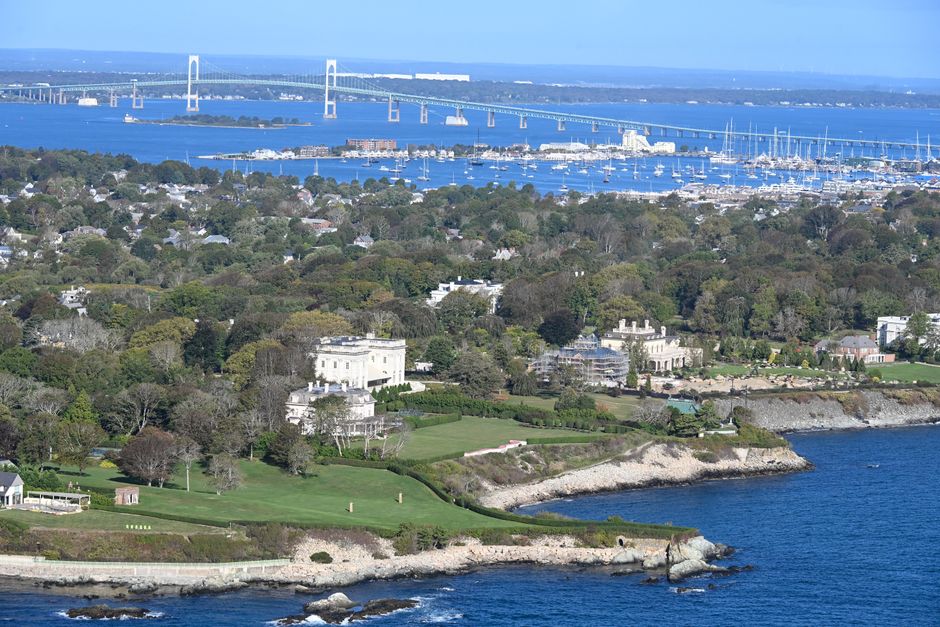
The Vanderbilts, heiresses, socialites—these names built palaces on Newport’s cliffs. The Breakers (1895) is perhaps the grandest: 70 rooms, opulent interiors, commanding views over the Atlantic. Its opulence was meant to outshine—not just entertain. Then there’s Marble House, with its Italian palazzo design, marble pillars, and lavish ballroom. And Rough Point, overlooking the sea, where Doris Duke made her home—much quieter than the others, but rich with art, nature, and stories of a rich woman funding museums and working in philanthropy long before some noticed. The history of these Newport landmarks is interwoven with the famed Newport Cliff Walk.
Ochre Court & Chateau-Sur-Mer
These are mansions that aren’t merely homes—they’re statements. Ochre Court was built in 1892. Big stone, French chateau style—now part of Salve Regina University, with gardens that bloom quietly behind pillars. Chateau-Sur-Mer, from 1852, offers High Victorian elegance, a Chinese moongate in its park, and rooms that seem made for afternoon tea. When you walk along Bellevue Avenue, stop at one of these. The stone, the stained glass, the furniture—they all tell what it meant to be rich and visible in late 19ᵗʰ-century America. Discover more about Rhode Island’s grand estates at VisitRI.com.
The Cliff Walk: Where Ocean Meets Architecture
Ready for walking in two worlds at once? On one side: crashing waves, salt air, shocking blues. On the other side: manicured lawns, ornate turrets, mansions built for summer showing off wealth. That’s the Cliff Walk.
History Under Your Feet
The path traces back to deer trails, then Narragansett footpaths, then colonial rights established by King Charles II in 1663, ensuring “fishermen’s rights” and land to roam by the shore. Rhode Island’s constitution reinforced that publicly shared shore in 1843. So the walk was never just a trail—it was and is a symbol of public access versus private demonstration. Mansion owners, with power and money, tried to fence things off; Rhode Islanders insisted otherwise. It’s not just scenery—it’s civil rights in rock and salt air. You can delve deeper into its fascinating past at CliffWalk.com.
Segments: Pick Your Pace
The 3.5-mile path runs from Easton’s Beach (Memorial Boulevard) in the north to Bailey’s Beach (Bellevue Avenue) in the south. But you can experience parts of it without going the whole distance. Here’s how the segments break down:
- Memorial Boulevard to Forty Steps: Paved, relatively flat—ideal for gentle walking. You’ll pass ocean views, the early mansions, and get your bearings without steep steps. Great warm-ups.
- Forty Steps to Ruggles Avenue: Some steps; views of Salve Regina University and portions of The Breakers. Architecture looms; the ocean crashes rhythmically.
- Ruggles to Belmont Beach: Terrain gets tougher here—rockier, more rugged. The ocean feels closer; sometimes waves spray if it’s windy from south. Bring shoes with grip, maybe walking sticks if you like.
- Belmont to Ledge Road: More scrub, wildflowers, more cliff-edge drama. If you love geology—or watching seabirds—this stretch is made for you.
- Ledge Road to Bellevue Avenue (Reject’s Beach end): Roughest underfoot. Tunnel under cliffs, stunted guardrails, sharp drops. But few places offer this merging of sea, stone, and sky. If you’re steady, this is unforgettable. Otherwise, turn around where the path feels good.
Tips as Your Tour Guide
- Go early in the morning or after crowds disperse. Salt air tastes sweeter, and colors glow better.
- Wear sturdy shoes; even flat paths have patches of uneven rock.
- Bring a light sweater—ocean breeze gets cold fast when you’re near the edge.
- Check tide or weather reports. After storms, parts may close. Look out for detours between Narragansett Avenue and Webster Street. Further planning tips can be found at Discover Newport.
- Don’t rush the mansions—inside tours take time, often only open certain hours.
A Sample Gentle Itinerary for Seniors
Here’s how you might spend a full day soaking in all this, without rushing.
- Breakfast in Wickford—fresh fish shack, peaceful harbor view.
- Head to Newport; take a harbor cruise or visit Fort Adams early.
- Lunch on Bellevue Avenue—maybe near Ochre Court.
- Tour The Breakers or Marble House—choose one, linger in gardens.
- Spend afternoon on the northern Cliff Walk segment (Memorial Blvd to Ruggles). Sit, watch, breathe.
- Dinner overlooking the water, maybe at a lobster roll shack or seafood-pier spot.
Curious Facts & Stories to Share
Did you know that mansion owners once tried to block the Cliff Walk entirely—planting fences, boulders, even bulls? Public rights won out under long-standing colonial and constitutional laws. You can read more about this fascinating aspect of its history at CliffWalk.com.
Or that the natural formations along the cliffs still contain ancient plant fossils? And that Belmont Beach is one of the few places where the ocean almost seems to touch the lawns of mansions right at your feet? Stars glow clearer here because of low light pollution—if you stay until dusk. The Cultural Landscape Foundation offers more insights into the unique environment of the Cliff Walk.
Summary
Rhode Island is small, but full of layered beauty. Harbors like Newport, Wickford, Old Harbor whisper maritime tales; mansions like The Breakers, Ochre Court, Chateau-Sur-Mer show us how people lived in gilded times; the Cliff Walk gives us an open-air classroom in geography, art, law, and nature. You can choose ease—quiet benches, shorter paths—or something a little more spirited. But at every turn, there’s air scented with salt, stones heavy with history, and vistas that stay with you. If you’ve been searching for a place that moves gently yet deeply, Rhode Island won’t disappoint.